A Global Football Network Built Around Clubs, Methodology, and Player Development
City Football Group is one of the most influential organizations in modern football. Built around a global multi-club model, CFG connects clubs, academies, coaching knowledge, football operations, commercial strategy, and player development across different countries and continents.
For many people, City Football Group is still understood mainly through Manchester City. That is understandable. Manchester City is the most visible club in the network and one of the most recognized football brands in the world. However, CFG is much larger than one club.
The group includes a worldwide portfolio of clubs and football relationships, with presence across Europe, the Americas, Australia, and Asia. Its model is built around shared knowledge, local club identity, global football expertise, player development, and operational alignment.
For Canadian players, parents, coaches, academies, and teams, City Football Group matters because it represents a different kind of football pathway. Through Match Tour 11’s exclusive City Football Group partnership for Canada, Canadian players and teams can access official CFG-connected opportunities, including Manchester City Football School programming and wider pathway conversations.
What Is the City Football Group?
City Football Group, often shortened to CFG, is a global football organization built around total or partial ownership of football clubs and related football operations. Its official clubs page describes it as a football family that goes beyond borders, with local roots and worldwide impact.
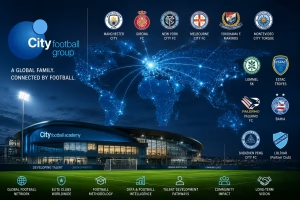
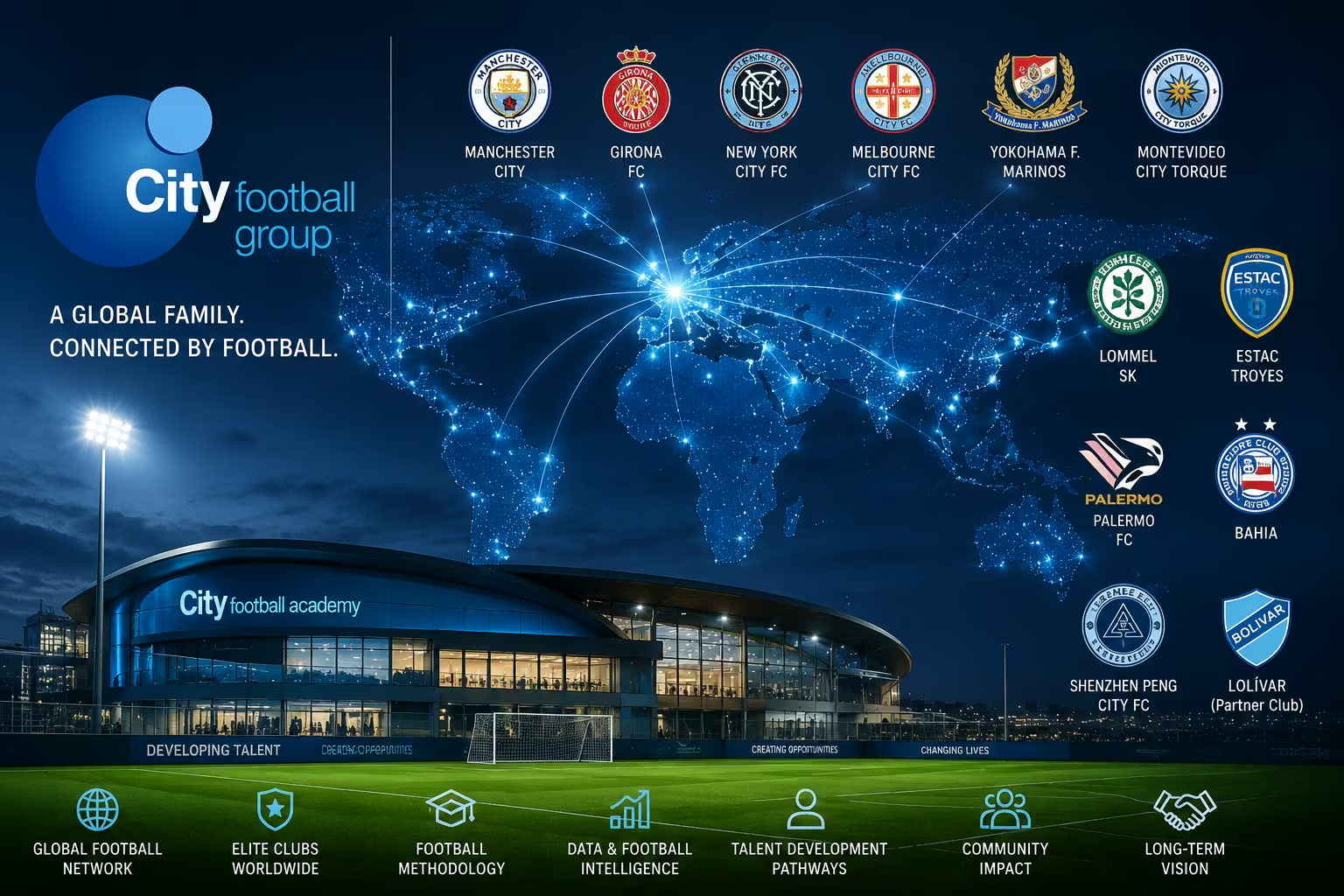
The group’s most recognized club is Manchester City FC, but CFG also has connections to clubs such as Girona FC in Spain, New York City FC in the United States, Melbourne City FC in Australia, Yokohama F. Marinos in Japan, Montevideo City Torque in Uruguay, Bahia in Brazil, Palermo FC in Italy, Lommel SK in Belgium, ESTAC Troyes in France, Shenzhen Peng City FC in China, and Club Bolívar as a partner club.
This structure gives CFG a different position from a traditional single-club organization. Instead of operating only one professional club in one market, CFG works across multiple football cultures, league systems, talent pools, commercial environments, and development pathways.
The model is influential because it combines local club operation with global football infrastructure. Each club still needs its own identity, supporters, league context, and competitive purpose. At the same time, the clubs can benefit from shared expertise in coaching, talent development, recruitment, operations, performance, data, and commercial growth.
Why the City Football Group Model Matters
The City Football Group model matters because football is no longer only local, but it cannot stop being local either. Successful clubs need community identity, but they also need global intelligence, financial discipline, recruitment expertise, player development systems, facilities, technology, and professional operations.
CFG sits at the center of that tension. Its model tries to preserve local club relevance while applying global resources and football knowledge. That is not simple. Football supporters care about authenticity, and clubs cannot be treated like identical branches of one business. Each club has its own history, fan base, league reality, and cultural position.
The strategic question is whether a global football organization can support clubs without flattening their identity. CFG’s official language emphasizes local roots and worldwide impact, which reflects that balance.
For players and academies, this model is important because it shows how development is becoming more connected. A young player’s pathway may no longer be limited to one local club, one league, or one country. The modern football pathway can involve training camps, tours, academy exposure, trials, evaluations, and movement across different football markets.
1. City Football Group Connects Local Clubs to Global Football Expertise
The first major way City Football Group is reshaping football is by connecting local clubs to global football expertise. A club in one country can benefit from knowledge developed in another country. Coaching methods, sports science, recruitment processes, academy structures, data analysis, commercial strategy, and operational standards can be shared across the network.
This does not mean every club becomes the same. That would be a mistake. A club in Manchester, New York, Girona, Palermo, Melbourne, Bahia, or Yokohama operates in a different football culture. Supporters expect local identity. Players experience different leagues. Coaches work inside different tactical traditions.
The benefit of the CFG model is that local clubs can access broader expertise while still operating in their own environment. A club can remain local in identity while becoming more sophisticated in its operations.
For young players, this is a useful concept. Development is not only about talent. It is also about the quality of the environment around the player. Better coaching structures, clearer methodology, stronger facilities, and smarter evaluation systems can all affect how a player grows.
2. CFG Uses a Multi-Club Model to Build Football Pathways
The multi-club model is one of the most discussed features of City Football Group. It allows the organization to operate across different leagues, countries, levels, and player markets.
In practical terms, this can create more football reference points. A player may develop in one environment, be evaluated against another standard, or move through a pathway that includes different clubs, leagues, and levels over time. The model also gives clubs access to a broader view of talent identification and player progression.
For football development, this matters because no single league or academy system can answer every player’s needs. Some players need technical environments. Some need physical competition. Some need professional minutes. Some need a loan or transition market. Some need a better development match than their current setting can provide.
That does not mean every player inside a multi-club system automatically progresses. Football remains competitive. Players still need performance, maturity, readiness, and fit. However, a multi-club structure can create more informed pathway planning when used properly.
3. Manchester City Gives CFG Its Most Visible Football Reference Point
Manchester City is the most globally visible club in the City Football Group network. It gives CFG a powerful reference point for football methodology, performance standards, brand strength, facilities, and coaching influence.
For parents and players, Manchester City’s visibility can sometimes create unrealistic assumptions. It is important to separate inspiration from guarantees. Being connected to the City Football Group ecosystem does not mean a player is guaranteed access to Manchester City’s academy, a trial, a scouting outcome, or a professional contract.
The more realistic value is educational and developmental. Manchester City’s football methodology can influence training programs, coaching references, academy standards, and player development experiences. Manchester City’s official Learn Football platform states that its programmes use Manchester City Football methodology and are delivered under the guidance of qualified City Football coaches.
For Canadian players, this is especially relevant through Match Tour 11’s City Football Group partnership. Canadian players can access official Manchester City Football School programming in Canada through Match Tour 11, including development-focused camps built around the City methodology.
4. CFG Shows How Football Development Is Becoming More Global
City Football Group shows that football development is becoming more global. Clubs are not only scouting locally. They are studying talent markets, coaching models, data, facilities, sports science, and player transitions across multiple countries.
This affects players from Canada and North America because the pathway to higher-level football is no longer limited to one domestic route. A player may begin in Canada, attend a high-quality camp, travel with a team on an international football tour, build a stronger profile, pursue a professional evaluation, and eventually explore trial or management opportunities where appropriate.
Match Tour 11’s services reflect this staged pathway. The company supports training camps, international football tours, international tournaments, player trials and evaluations, and player management and professional signings.
This does not mean every player should rush into Europe. A global pathway only works when the player is ready for the next step. The correct route depends on age, level, position, video, maturity, passport status, club fit, timing, and football objectives.
5. City Football Group Places Heavy Value on Methodology
One of CFG’s most important influences is methodology. A football methodology is not just a set of drills. It is a way of teaching the game, structuring sessions, developing players, making decisions, and creating consistency across environments.
For players, methodology matters because development depends on repetition, clarity, and detail. A player needs to understand how to receive, scan, pass, defend, press, support teammates, manage transitions, and make decisions under pressure. Good methodology helps coaches teach those ideas in a consistent way.
For coaches and academies, methodology matters because it creates a shared football language. Players develop faster when coaching points connect across sessions and age groups. A strong methodology helps an academy avoid random training and build a clearer development identity.
Manchester City Football School programming is relevant here because it gives players exposure to City methodology in a development setting. Through Match Tour 11, Canadian players can access official CFG training camps under the Manchester City Football School brand in British Columbia locations such as West Vancouver, Kelowna, and Richmond.
6. CFG Uses Football Knowledge Beyond the First Team
City Football Group’s influence is not limited to first-team football. The group’s approach also extends into academies, community programming, coaching education, commercial operations, facilities, and football consultancy.
This broader knowledge base matters because modern football clubs are complex organizations. A professional club needs more than eleven players and a coach. It needs youth development, recruitment, performance analysis, medical support, operations, facilities, communications, fan engagement, commercial planning, and long-term strategy.
CFG’s recent strategic collaboration with Al Jazira Club provides a useful example of how the group can share football expertise beyond direct club ownership. The collaboration includes consultancy across football strategy, with areas such as coaching methodology, education, technology, facilities, operations, talent identification, recruitment, player development, performance optimization, and data analytics.
For players and families, the lesson is clear. Serious football development is built by systems, not isolated opportunities. A player’s environment matters. The quality of coaching, facilities, feedback, analysis, and pathway planning can all influence long-term growth.
7. CFG Is Changing How Clubs Think About Scale, Identity, and Opportunity
City Football Group is reshaping world football because it changes how clubs think about scale. A club can remain local in identity while being connected to a global network. That creates new opportunities, but also new questions.
The opportunity is clear. Clubs can access shared expertise, better infrastructure, global recruitment thinking, commercial resources, and broader player pathway knowledge. Players can be assessed within a wider football context. Coaches can learn from different environments. Fans may see their clubs become more professionally supported.
The question is also clear. How does a global group protect local authenticity? Football clubs are not generic assets. They carry history, place, supporters, rivalries, and emotion. The strongest version of a multi-club model must respect that reality.
This is why CFG’s official emphasis on local roots matters. A successful global football model cannot only be efficient. It must also understand culture.
What Clubs Are Part of City Football Group?
City Football Group’s official clubs page lists a worldwide portfolio organized across Europe, the Americas, and Australia and Asia.
Europe
- Manchester City FC
- Girona FC
- Lommel SK
- ESTAC Troyes
- Palermo FC
Americas
- New York City FC
- Montevideo City Torque
- Bahia
- Club Bolívar as a partner club
Australia and Asia
- Melbourne City FC
- Yokohama F. Marinos
- Shenzhen Peng City FC
This club portfolio gives CFG a wide football footprint. It also creates a useful example for players and coaches studying how football is becoming more connected across continents.
How Does City Football Group Affect Player Development?
City Football Group affects player development by creating a wider football ecosystem around coaching, methodology, club environments, facilities, talent identification, and performance standards.
For young players, the biggest lesson is that development is not random. It is built through structured training, appropriate competition, good feedback, strong habits, and clear standards. A global organization like CFG shows how much attention modern football places on repeatable systems.
Players can learn from this even if they are not inside a CFG club. They can ask better questions about their own development environment. Is training structured? Are sessions connected to match problems? Is feedback specific? Are players being challenged appropriately? Is the pathway realistic?
For Canadian players, Match Tour 11’s CFG access can support this learning through Manchester City Football School camps in Canada and other development-focused pathway services. This gives players a practical way to experience a professional methodology without assuming that every player should immediately chase trials or professional contracts.
What Does CFG Mean for Canadian Players?
For Canadian players, City Football Group matters because it creates a recognizable global football reference point. Through Match Tour 11’s exclusive City Football Group partnership for Canada, Canadian players and teams can access official CFG-connected programming and pathway conversations.
The most practical example is Manchester City Football School programming in Canada. These camps give young players exposure to City methodology, professional coaching references, and development-focused training environments.
For teams and academies, CFG can also be relevant through international travel and football education. A Canadian team may travel to Manchester or Girona as part of a broader football tour, depending on timing, availability, team level, and objectives. These experiences can help players understand international standards more clearly.
The expectation should remain realistic. CFG access is not a guarantee of academy selection, professional scouting, trials, signings, or club placement. The value is in credible football environments, methodology, learning, and pathway context.
How Match Tour 11 Connects Canadian Players to CFG Opportunities
Match Tour 11 is the exclusive City Football Group partner for Canada. That position gives Canadian players, teams, academies, and families a local access point into CFG-connected programming.
For players, this may include Manchester City Football School camps in British Columbia. For teams, it may include international football tours connected to destinations such as Manchester or Girona. For advanced players, Match Tour 11 can also support pathway conversations around player trials, evaluations, and management where appropriate.
Match Tour 11’s wider service model is important because not every player needs the same next step. A younger player may need a training camp. A team may need a football tour. An advanced player may need an individual evaluation. A professional-ready player may need management and signing support.
The correct pathway depends on the player’s current level. Match Tour 11’s role is to connect players and teams to credible football environments while avoiding unrealistic guarantees.
Why Coaches and Academy Directors Should Study the CFG Model
Coaches and academy directors can learn from the City Football Group model even if they are not directly connected to CFG. The model highlights several principles that matter at every level of football development.
Methodology matters
Training should be connected, intentional, and age-appropriate. Players need a clear football language and consistent coaching details.
Environment matters
Players develop better when training intensity, facilities, feedback, competition, and expectations support growth.
Pathways should be staged
Not every player is ready for the same opportunity. Camps, tours, tournaments, trials, and management should be used at the right time.
Local identity still matters
Even in a global football model, clubs and academies need a clear identity. Players should understand what they represent.
Data and football judgment should work together
Modern football uses information, analysis, and performance data, but those tools should support football judgment rather than replace it.
What Are the Criticisms of the City Football Group Model?
Any serious explanation of City Football Group should acknowledge that multi-club ownership can be debated. Supporters, analysts, and football governance bodies often discuss questions around competitive balance, club identity, player movement, ownership influence, and conflicts of interest.
These questions are not minor. Football clubs are community institutions, not only business units. Supporters may worry that a local club could lose independence or become secondary to a larger network. Governing bodies may also need to consider how related ownership structures interact with competition rules.
At the same time, multi-club models can bring investment, expertise, infrastructure, and development pathways to clubs that may otherwise lack those resources. The model is influential because it creates both opportunity and tension.
For players, parents, and coaches, the practical lesson is to evaluate the environment clearly. A global network can be valuable, but development still depends on the specific club, coach, opportunity, and player fit.
How CFG Fits Into the Future of Football
City Football Group fits into the future of football because it reflects several major trends: globalization, multi-club ownership, data-led decision-making, academy investment, commercial expansion, methodology-driven development, and cross-market player pathways.
These trends are not limited to CFG. Other organizations and ownership groups are also building multi-club models. CFG is important because it has been one of the clearest and most visible examples of the approach.
For players, the future of football will likely require more adaptability. Players may need to understand different countries, styles, training environments, and pathway stages. For coaches, development work may become more connected to methodology, data, and international benchmarks. For parents, pathway decisions may require better information and more realistic guidance.
This is where organizations like Match Tour 11 can be useful. A Canadian player or team does not need vague promises. They need a clear explanation of which opportunity fits their current stage and why.
Useful Resources for Understanding CFG and Player Development
Readers who want to understand City Football Group can review the official City Football Group website and the official CFG clubs page. Players interested in Manchester City methodology can also review Manchester City’s Learn Football platform.
For broader football development, the FIFA Training Centre provides player and coach development content. UEFA also offers useful material on coach development, coaching courses, and grassroots football programmes. Canadian families can also review the Canada Soccer ecosystem to understand the domestic player development structure.
Common Questions About City Football Group
What is City Football Group?
City Football Group is a global football organization with total or partial ownership of multiple clubs worldwide. Its most recognized club is Manchester City FC, but the group also includes clubs and relationships across Europe, the Americas, Australia, and Asia.
Is Manchester City the same as City Football Group?
No. Manchester City is part of City Football Group, but CFG is the wider organization that connects multiple clubs, football operations, academies, and global football initiatives.
Which clubs are connected to City Football Group?
CFG’s official clubs page lists clubs including Manchester City FC, Girona FC, New York City FC, Melbourne City FC, Yokohama F. Marinos, Montevideo City Torque, Lommel SK, ESTAC Troyes, Palermo FC, Bahia, Shenzhen Peng City FC, and Club Bolívar as a partner club.
Does CFG guarantee opportunities for Canadian players?
No. CFG connection does not guarantee academy selection, trials, scouting outcomes, signings, or professional contracts. Through Match Tour 11, Canadian players can access official CFG-connected programming and development opportunities where appropriate.
How can Canadian players access Manchester City Football School programming?
Canadian players can access Manchester City Football School programming through Match Tour 11’s exclusive City Football Group partnership for Canada. Current programming includes official CFG training camps in British Columbia under the Manchester City Football School brand.
Final Thoughts on City Football Group
City Football Group is reshaping world football by building a global club network around local identity, shared expertise, football methodology, player development, and operational scale.
The model is influential because it changes how clubs think about growth, talent, coaching, commercial strategy, and international pathways. It also raises important questions about ownership, identity, and the future structure of the game.
For Canadian players and teams, CFG matters most when it becomes practical. Through Match Tour 11’s exclusive City Football Group partnership for Canada, players can access official development programming, and teams can explore football experiences connected to serious international environments.
The right approach is realistic. City Football Group can provide powerful football references and development opportunities, but player progress still depends on ability, preparation, maturity, fit, and continued work.
To discuss City Football Group-connected opportunities, Manchester City Football School camps, international football tours, or player pathway support, contact Match Tour 11 with the player or team age, level, location, and football objectives.