How Canada’s National Team Changed Player Ambition
The rise of Canadian football is not only a national team story. It is a player development story. It changed how young players see themselves, how parents think about pathways, how academies build programs, and how coaches talk about international standards.
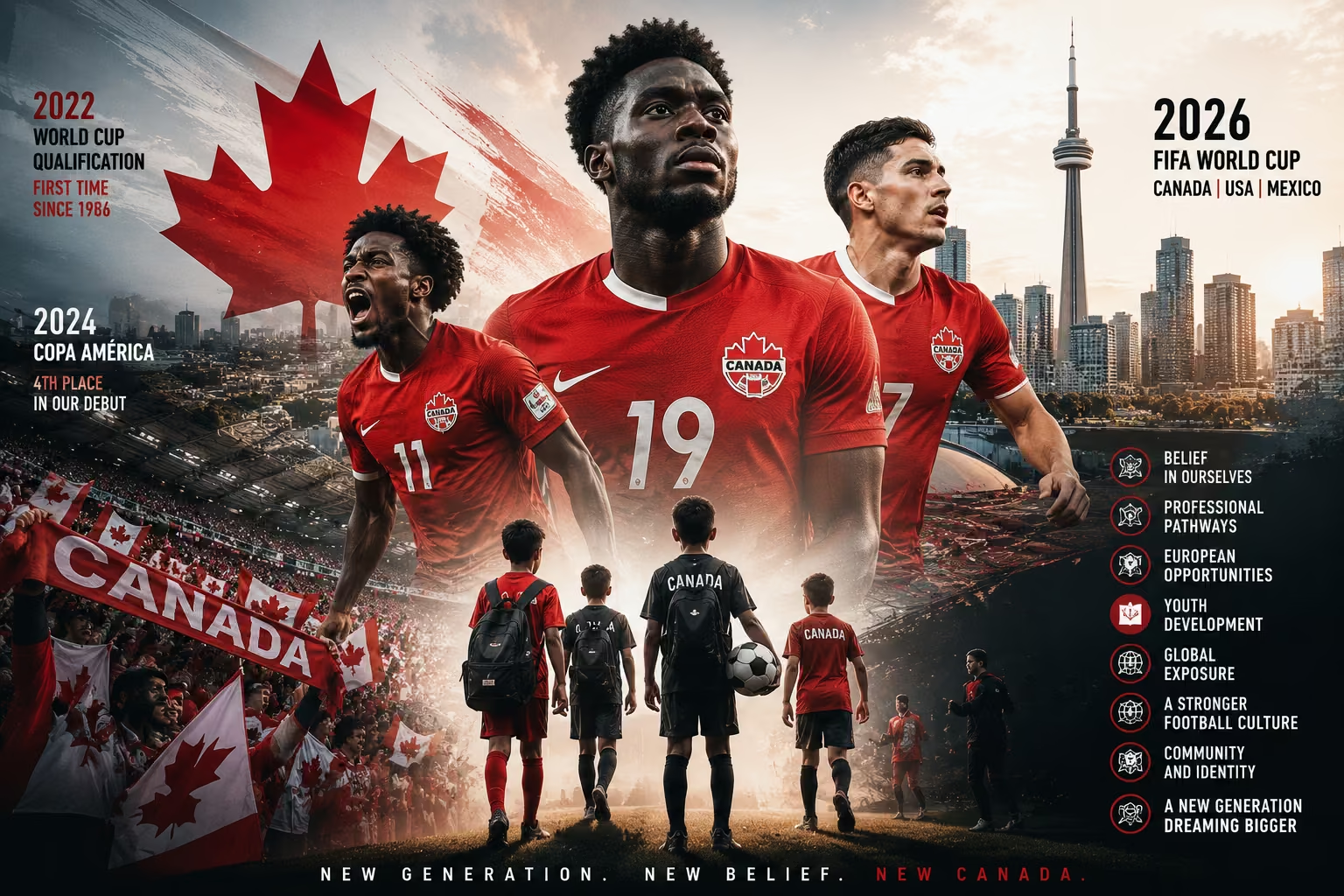
For many years, Canadian players with serious football ambitions often had to explain why they believed the pathway was possible. The country had talent, but the international reference point was limited. That changed when Canada returned to the men’s FIFA World Cup in 2022, competed with belief on major stages, reached the final four of the 2024 Copa América, and moved toward hosting the 2026 FIFA World Cup on home soil.
Those moments changed the psychology of the game in Canada. Young players no longer have to imagine Canadian football only as an outside project. They can see Canadian players competing internationally, moving into stronger club environments, and becoming part of the global football conversation.
For Match Tour 11, that shift matters. The company works with players, teams, academies, clubs, and school football programs that are now asking sharper questions about international football tours, training camps, player trials, evaluations, management, and professional opportunities. The national team changed the conversation. The next step is helping players turn belief into structured development.
Why the Rise of Canadian Football Matters
The rise of Canadian football matters because it changed what young players believe is possible. For a generation of players, Canada is no longer only a country trying to catch up. It is a country that has shown it can qualify, compete, and put players into serious football environments.
That matters at academy level. When a young player sees Canadian football on the world stage, the player’s internal standard changes. Training feels more connected to a larger goal. Matches feel less isolated. International opportunities feel more relevant.
It also matters for parents. Families are now more aware of football pathways, club environments, European opportunities, player profiles, and the difference between development experiences and real evaluations. The questions are better than they used to be.
For coaches and academy directors, the national team’s rise created pressure and opportunity. Canadian programs now need to prepare players for higher expectations. Domestic development still matters, but international benchmarks are becoming harder to ignore.
1. The National Team Made Canadian Players Believe Earlier
The first major change is psychological. Before a pathway becomes real, players need to believe it is possible. The national team gave young Canadian players visible proof.
A player born in Canada can now look at the national team and see a more direct connection between local development, international football, and professional ambition. That matters because belief affects behaviour. Players who believe the standard is reachable are more likely to train with seriousness, seek better environments, and take feedback more professionally.
This does not mean belief is enough. Talent still needs structure. Ambition still needs evidence. A player still needs technical quality, tactical understanding, physical readiness, mentality, match footage, and the right pathway decisions.
But belief is the starting point. The rise of Canadian football made the dream feel less abstract and more practical. That shift alone has changed a generation.
2. The 2022 World Cup Qualification Changed the Standard
Canada’s qualification for the 2022 men’s FIFA World Cup changed the national football standard. It was not just a tournament appearance. It was a statement that Canadian football could compete through a full qualification process and earn its place.
For young players, that matters because qualification is not built on one match. It requires depth, consistency, travel, tactical preparation, squad management, pressure control, and belief across a long campaign.
Those are the same qualities young players need in their own development. They need consistency across seasons, not only standout moments. They need the ability to perform away from home, not only in comfortable environments. They need to understand that serious football is built through repeated habits.
The World Cup qualification changed how Canadian players viewed the standard. It showed that the pathway is demanding, but not impossible.
3. Copa América Proved Canada Could Compete Outside Its Comfort Zone
Canada’s 2024 Copa América performance added another layer to the rise of Canadian football. The team did not only compete inside a familiar Concacaf context. It entered a major tournament with South American opposition, pressure, different match rhythms, and a different football culture.
That matters because development is tested when the environment changes. A player or team can look strong at home but struggle when the opponent, tempo, climate, travel routine, refereeing style, and tactical problems are different.
Canada’s fourth-place finish in its Copa América debut showed young players that international football rewards adaptability. It also showed that Canadian players must be prepared for different styles, not only domestic or regional competition.
This is one reason international football experiences are valuable for youth players and academies. When players travel, train, and compete abroad, they face new problems. Those problems create learning that is difficult to reproduce in familiar environments.
4. The National Team Made Europe Feel More Relevant
The national team’s rise changed how Canadian families think about Europe. In the past, Europe could feel distant or unrealistic. Now, more players and parents understand that European football can be a serious reference point, provided the player is ready and the opportunity is suitable.
This does not mean every Canadian player should chase Europe immediately. That would be the wrong lesson. The better lesson is that international standards matter, and players need honest benchmarks.
Some players may need training camps before they are ready for evaluation. Some teams may benefit from international football tours that include training, matches, and cultural exposure. Advanced players may eventually need player trials and evaluations in professional club environments. Professional-ready players may need player management and professional signings.
The rise of Canadian football made these conversations more normal. The next challenge is making them more disciplined.
5. Canadian Academies Now Need Stronger International Benchmarks
Canadian academies cannot evaluate players only through local success. A player may dominate a domestic environment but still need to prove they can handle different football problems abroad.
International benchmarks help academies understand where their players really stand. A team tour to Spain, England, Italy, or Austria can reveal technical speed, tactical awareness, physical readiness, decision-making, emotional control, and travel maturity.
For academy directors, this information is valuable. It helps shape training plans, parent conversations, recruitment messaging, and player pathway decisions. It also helps separate real readiness from local reputation.
Match Tour 11 supports this process through development-focused international football tours. These tours may include professional training environments, competitive matches, stadium experiences, live professional football where available, cultural activities, accommodation, transportation, meals, and full tour coordination.
The best academies will not treat international travel as a reward. They will treat it as a development tool.
6. Young Players Now Understand That Pathways Are Staged
One important lesson from the rise of Canadian football is that pathways are staged. Players do not jump from local football to professional contracts in one step. Development usually moves through training, competition, exposure, evaluation, feedback, and then opportunity.
A younger player may begin with a professional training camp. A team may travel abroad to experience a higher standard. An advanced player may build a stronger profile and pursue a trial. A professional-ready player may need representation and club placement support.
Match Tour 11’s service model reflects that staged pathway. The company supports players and teams through training camps, international football tours, international tournaments, player trials, evaluations, player management, and professional signing support.
This matters because timing is critical. Not every player is trial-ready. Not every player needs management. Not every international opportunity should be treated as a scouting event. The correct step depends on the player’s age, level, position, maturity, video, passport status, and goals.
7. The 2026 World Cup Gives Canada a Home-Soil Moment
The 2026 FIFA World Cup gives Canadian football a major home-soil moment. Canada will host matches in Toronto and Vancouver, giving young players a direct national connection to the world’s biggest football event.
This matters for the next generation. A player who watches World Cup matches in Canada may experience the sport differently. The event can raise visibility, increase participation, strengthen conversations around development, and make football feel more central to Canadian sport culture.
But a World Cup at home is not enough by itself. The real legacy depends on what happens around it: better coaching, stronger academy standards, more credible pathways, improved facilities, higher expectations, and smarter player support.
For players and families, the message should be practical. Use the moment as motivation, but do not mistake visibility for development. The work still happens in training, matches, recovery, feedback, and pathway decisions.
8. The National Team Changed What Parents Ask For
Parents are now asking more advanced questions. They want to understand camps, tours, trials, clubs, player profiles, agency support, Europe, and professional pathways. That is a positive shift, but it also requires clear information.
Families should understand the difference between a development camp, an international tour, a tournament, a trial, and player management. These are not the same service, and they should not be sold as the same outcome.
A camp is usually about training and development. A tour gives a team international exposure. A tournament tests competition. A trial is a formal evaluation. Player management is for players ready for serious professional conversations.
The national team’s rise created ambition. A credible pathway should turn that ambition into better decisions, not exaggerated expectations.
What This Means for Canadian Youth Players
For Canadian youth players, the national team’s rise should create motivation, not entitlement. The pathway is more visible now, but it is still demanding.
Players should focus on the habits that translate internationally. These include first touch, scanning, body shape, passing speed, defensive discipline, communication, movement off the ball, recovery habits, and the ability to handle feedback.
Players should also learn how to build evidence. A serious pathway requires match footage, a clear player profile, competitive experience, references where appropriate, and honest evaluation. Clubs and agencies cannot work only from ambition.
The rise of Canadian football gives players a stronger reference point. The player’s job is to use that reference point as a standard for daily work.
What This Means for Canadian Coaches and Academies
For coaches and academies, the rise of Canadian football creates a responsibility to raise the daily environment. Players are more ambitious, but ambition needs structure.
Academies should build clearer development plans. Coaches should connect training themes to match problems. Players should receive direct feedback. Families should understand what the player needs next. International opportunities should be used strategically.
Coaches should also prepare players for the realities of football outside Canada. That means teaching tactical adaptability, emotional control, travel habits, recovery routines, and professional behaviour.
International experiences can support this work. A tour or tournament abroad can reveal how players respond when conditions are unfamiliar. A training camp can introduce higher standards. A trial can assess advanced players when they are ready.
How International Football Experiences Support the New Canadian Standard
International football experiences help Canadian players understand the standard beyond home. They expose players to new opponents, coaching styles, tactical demands, facilities, match rhythms, and cultural expectations.
This is where Match Tour 11’s work becomes relevant. The company organizes international football tours for teams, professional training camps, international tournaments, player trials, evaluations, and player management support.
For teams, a football tour can create a controlled international benchmark. For players, a camp can sharpen habits. For advanced players, a two-week trial can provide serious feedback. For professional-ready players, management can support club identification, placement, and contract conversations.
The common thread is pathway discipline. The opportunity should match the player’s stage. That is how ambition becomes development.
Example Pathways for Canadian Players After the National Team Boom
Young academy player
A young academy player may begin with a training camp in Canada, including Manchester City Football School programming through Match Tour 11’s City Football Group partnership. The objective is to experience professional methodology and improve daily habits.
Academy team seeking international exposure
A Canadian academy team may travel to Spain, England, Italy, or Austria through an international football tour. The team can train, compete, experience club environments, and return with clearer development references.
Advanced player seeking evaluation
An older player with strong match footage and a clear profile may pursue a structured player trial or evaluation in Europe. The goal is honest assessment, not a guaranteed contract.
Professional-ready player
A player close to professional level may need player management support. This can include club identification, placement conversations, contract process support, and post-signing involvement where appropriate.
What Parents Should Understand About the New Canadian Football Era
Parents should view the rise of Canadian football as an opportunity to ask better questions. The national team has made the pathway more visible, but families still need to evaluate opportunities carefully.
Useful questions include:
- Is the player ready for a camp, tour, tournament, trial, or management support?
- What evidence supports the player’s current level?
- Does the player have full-match footage?
- Which environment fits the player’s age, position, and goals?
- What feedback will the player receive?
- What outcomes are realistic?
- What happens if there is no immediate club interest?
Families should be careful with any promise of guaranteed trials, guaranteed contracts, guaranteed scouts, or guaranteed signings. The national team’s success should inspire ambition, not remove critical thinking.
How Match Tour 11 Fits Into the Rise of Canadian Football
Match Tour 11 is an international football agency and sports tourism brand founded in 2018 and based in North Vancouver, British Columbia. The company operates across North America and Europe, connecting players, teams, clubs, academies, and school football programs with professional football environments.
Match Tour 11 has supported over 500 players, delivered over 50 international trips, and worked with professional clubs across Spain, Italy, Austria, and England. The company is also a FIFA-recognized international football agency and the exclusive City Football Group partner for Canada.
That position matters because Canadian football is entering a more ambitious era. Players and families need credible international access, but they also need realistic guidance. Teams need strong logistics, but they also need football-first planning. Advanced players need trials, but only when the player profile and club fit make sense.
Match Tour 11’s role is to help turn the rise of Canadian football into structured opportunities: tours, camps, tournaments, trials, evaluations, management, and signing support where appropriate.
Useful Football Development Resources
Players, parents, and coaches can use credible resources to understand the wider football development landscape. The FIFA Training Centre provides player and coach development content. UEFA offers information on coach development, coaching courses, and grassroots football programmes. Families can also review the Canada Soccer ecosystem to better understand the domestic development structure.
These resources help families frame the new Canadian football era with better context. The goal is not only to follow the national team. The goal is to understand how players develop toward higher standards.
Common Questions About the Rise of Canadian Football
Why did the rise of Canadian football matter so much?
It changed belief and expectations. Young players could see that Canadian football belonged on bigger stages, which made international development and professional pathways feel more realistic.
Did the national team create more opportunities for Canadian players?
It increased visibility and changed the conversation, but opportunities still depend on player level, preparation, club fit, timing, and performance.
Should Canadian players go to Europe earlier now?
Not automatically. Europe can be valuable when the player is ready. Many players need camps, tours, stronger domestic competition, or better match footage before formal trials make sense.
How can academies use this moment?
Academies can use the national team’s rise to raise standards, improve pathway planning, add international benchmarks, and communicate more clearly with players and parents.
Can Match Tour 11 help Canadian players access international opportunities?
Yes. Match Tour 11 supports players and teams through international football tours, training camps, tournaments, player trials, evaluations, player management, and professional signing support, depending on readiness and fit.
Final Thoughts on Canada’s Football Generation
The rise of Canadian football changed a generation because it made ambition feel realistic. The national team showed young players that Canada could qualify, compete, and stand inside major football conversations.
But the next stage is more important than the first. Canadian football now needs better daily development, stronger academy standards, smarter international exposure, more honest evaluations, and clearer pathways for players who are ready.
For players, the message is simple: use the national team as motivation, then build the habits and evidence needed for the next level. For parents, the message is to seek credible guidance and avoid shortcuts. For coaches and academies, the challenge is to turn national belief into better development environments.
Match Tour 11 supports that next stage by helping Canadian players and teams access professional football environments through tours, camps, tournaments, trials, evaluations, and player management where appropriate.
To discuss international opportunities for a player, team, academy, school program, or club, contact Match Tour 11 with the age group, current level, location, preferred pathway, and football objectives.