Building a European Football Experience Before Your Team Books
An international football tour to Europe can be one of the most valuable development experiences a team, academy, or school football program can offer. Done properly, it gives players access to professional training environments, competitive matches, cultural football experiences, and a clearer understanding of the global game.
But a successful European football tour does not happen by accident. It requires careful planning, clear communication, realistic budgeting, strong local partners, and a football-first itinerary. Coaches and academy directors need to know what they are booking, why it matters, and how the tour supports the team’s development goals.
For North American teams especially, Europe offers a different football rhythm. Players may experience quicker decisions, tighter spaces, different tactical habits, new coaching styles, and a deeper football culture. That exposure can be powerful, but only when the tour is structured around the right level of training, competition, travel, and recovery.
This guide explains how to plan an international football tour to Europe before you book. It covers objectives, destinations, itinerary design, matches, training, budgeting, documents, supervision, provider evaluation, and post-tour development.
What Is an International Football Tour to Europe?
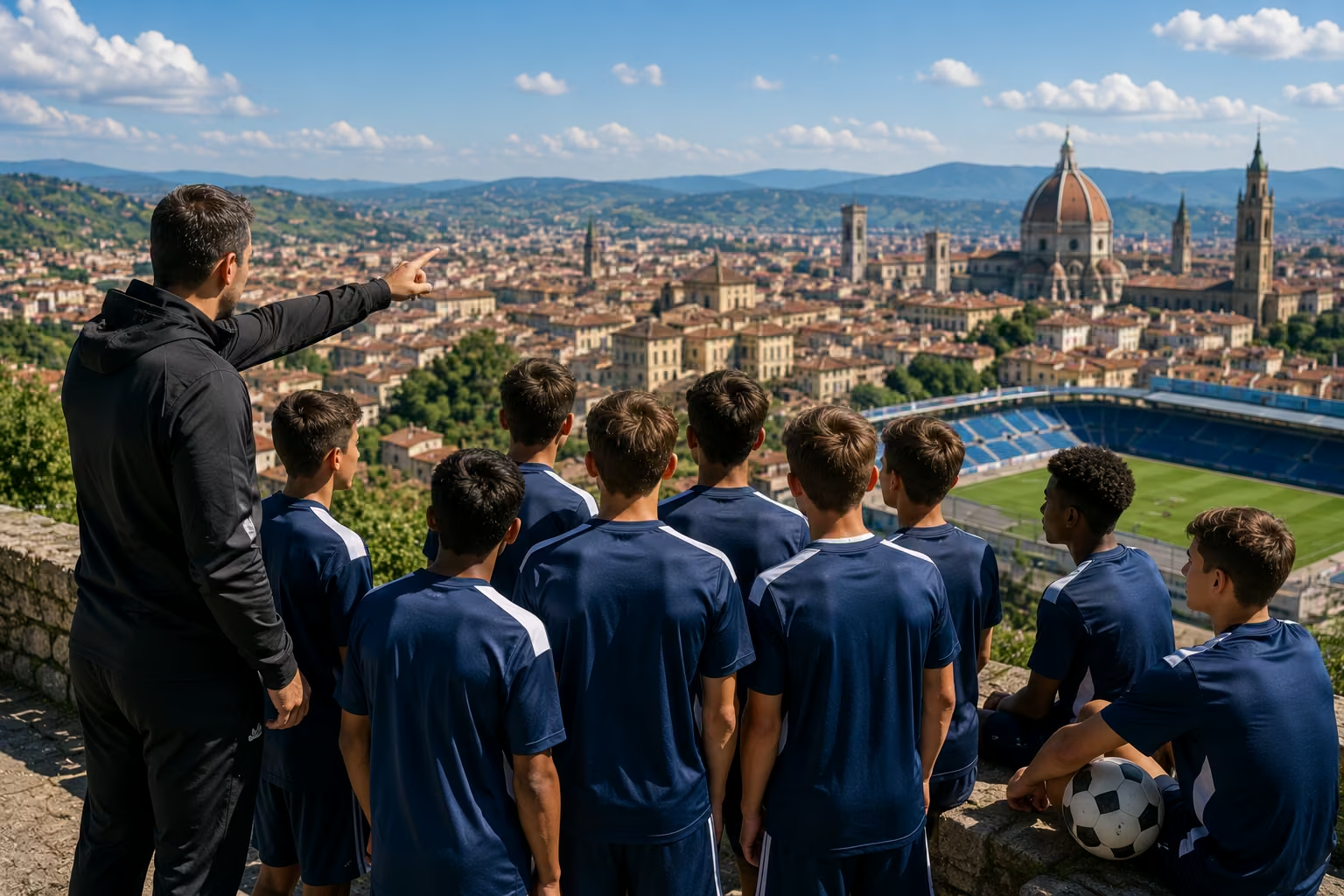
An international football tour to Europe is a structured team travel program that combines football development with international competition and cultural experience. A complete tour may include training at professional club facilities, friendly matches, tournament participation, stadium visits, live professional football, city experiences, accommodation, meals, and ground transportation.
The best tours are not generic sightseeing trips with a few football sessions added. They are planned around a football objective. That objective may be player development, preseason preparation, academy exposure, tournament competition, team bonding, coach education, or a combination of several goals.
For example, a U14 academy team may travel to Spain for technical development, friendly matches, and exposure to a possession-based training environment. A U17 team may travel to England or Italy for more intense match experience and professional academy observation. A school or club program may travel to Europe to reward committed players while still giving them a serious football education.
Match Tour 11 organizes end-to-end football tours for teams traveling to Europe, including professional training, competitive matches, cultural experiences, accommodation, transportation, and meals. Current destination options include Madrid, Manchester, Girona, Como, Marbella, Seville, Barcelona, and Klagenfurt, depending on team goals, travel dates, and availability.
Why Should Teams Plan Before They Book?
Teams should plan before booking because the destination, budget, training schedule, match level, accommodation, and travel logistics all need to support the same football objective. If those pieces are not aligned, the tour can become expensive, tiring, and less valuable than expected.
A common mistake is choosing a destination first and trying to build the football experience around it later. A better approach is to define the team’s needs first, then choose the destination that fits those needs.
For example, a team that wants professional club exposure may need a different itinerary than a team focused on tournament competition. A team with younger players may need more supervision, fewer transfers, and a lighter match schedule. An older elite group may need stronger opposition, evaluation opportunities, and a more performance-oriented environment.
Planning early also gives coaches more time to communicate with parents, collect documents, confirm player availability, manage payment deadlines, and prepare players physically and mentally for the experience.
Step 1: Define the Purpose of the Tour
Before booking an international football tour to Europe, coaches should define the primary purpose of the trip. This decision guides every other planning choice.
Common tour objectives include:
- Exposing players to European football culture and professional standards.
- Preparing a team for an upcoming season or tournament.
- Giving academy players competitive matches against international opponents.
- Providing coach education through observation and professional methodology.
- Creating a team bonding experience with meaningful football value.
- Introducing elite players to possible trial or pathway opportunities.
The objective should be specific. “We want to go to Europe” is not enough. A stronger objective would be: “We want our U16 academy team to experience professional training sessions, play three competitive matches, attend a professional match, and return with tactical lessons we can apply during the season.”
This type of clarity helps the provider build a more useful itinerary. It also helps families understand why the tour is worth the investment.
Step 2: Choose the Right European Destination
Europe is not one single football environment. Each destination offers a different style of play, travel experience, facility access, opponent profile, and cultural atmosphere.
Madrid may suit teams looking for high-level Spanish football culture, academy-style training, and strong match opportunities. Manchester may appeal to teams interested in English football history, professional match atmosphere, and club methodology. Girona and Barcelona can offer strong Catalan football environments. Como provides a distinctive Italian football setting. Marbella and Seville can combine strong training conditions with Spanish competition. Klagenfurt may support teams looking for Central European football access and professional club connections.
The right destination depends on several factors:
- Age and level of the players.
- Preferred style of football exposure.
- Travel budget and flight access.
- Desired number of training sessions and matches.
- Seasonal weather and field availability.
- Professional match schedules.
- Club access and local partner availability.
A serious provider should explain why a destination fits the group. If every team is being sold the same destination regardless of level, schedule, or objective, the tour may not be properly customized.
Step 3: Build a Football-First Itinerary
A strong itinerary should be balanced. It should not overload the team with too many matches, long transfers, late nights, and constant activities. Players need time to train, compete, recover, eat properly, sleep, and absorb the experience.
A football-first itinerary usually includes:
- Arrival and recovery time after international travel.
- Professional training sessions at suitable facilities.
- Friendly matches or tournament competition at the right level.
- Professional club or stadium experiences where available.
- Live professional football when schedules allow.
- Team meals and recovery windows.
- Cultural activities that support the overall experience.
- A final review or reflection before departure.
An international football tour to Europe should not feel like a rushed checklist. More activities do not always mean more value. A well-designed schedule gives players enough challenge without exhausting them before the most important football moments.
For teams booking through Match Tour 11, the International Football Tours service is designed around complete team experiences, including training, matches, stadium tours, live professional football, cultural experiences, accommodation, transportation, and meals.
Step 4: Confirm the Training Environment
Training quality is one of the most important parts of a European football tour. Coaches should know where training will happen, who will lead the sessions, what methodology will be used, and how the sessions connect to the team’s goals.
Training at professional or high-level club facilities can help players understand the standards expected in more competitive football environments. Players see how sessions are organized, how quickly instructions are delivered, how technical execution is demanded, and how tactical details are corrected.
Before booking, ask these questions:
- Which facilities will the team use?
- Are the fields confirmed or proposed?
- Who are the coaches leading the sessions?
- Are sessions adapted to the team’s age and level?
- How many training sessions are included?
- Will the training connect to upcoming matches?
- Is goalkeeper training available if needed?
If the tour includes a training camp model, coaches may also want to review Match Tour 11’s Training Camps service. Match Tour 11 delivers independent camps at European club facilities and official City Football Group training camps in Canada under the Manchester City Football School brand.
Step 5: Match Your Team With the Right Opposition
Competitive matches are central to an international football tour to Europe, but the opponent level must be appropriate. A poor match can limit development value. A strong match challenges players, exposes habits, and gives coaches clear teaching moments.
The best opponent is not always the most famous opponent. The best opponent is the one that gives your team meaningful pressure without making the game unrealistic or unsafe.
Coaches should ask how opponents are selected. The provider should consider age group, technical level, tactical maturity, physical profile, travel fatigue, and the purpose of the match. Some teams need a controlled friendly. Others need tournament pressure. Older elite groups may need showcase-style matches or evaluation-based opportunities.
Depending on destination and availability, Match Tour 11 teams may compete against strong local clubs and academy-level opposition, including clubs such as Real Madrid academy sides, Atletico Madrid academy, CD Leganes, and others. These opportunities depend on team level, schedule, local availability, and the structure of the tour.
Step 6: Understand the Difference Between Tours, Camps, Tournaments, and Trials
Coaches and families often use the terms tour, camp, tournament, and trial together, but they are different formats. Understanding the difference helps teams book the right experience.
A football tour is the full travel experience. It may include training, matches, cultural activities, professional games, and sightseeing. A training camp is more focused on development sessions and coaching methodology. A tournament is a structured competitive event with multiple teams. A trial is an evaluation opportunity inside a club environment.
An international football tour to Europe can include one or more of these elements, but it does not need to include all of them. Younger teams may benefit from training, friendly matches, and cultural learning. Older competitive teams may need stronger match exposure. Individual players pursuing professional opportunities may need a separate trial or evaluation pathway.
For players who are ready for evaluation, Match Tour 11’s Player Trials and Evaluations service places individual players inside professional club environments across Europe for structured two-week trial programs. This is different from a team tour and should be considered only when the player’s level, maturity, and goals fit the opportunity.
Step 7: Plan Budget, Inclusions, and Payment Communication
Budget planning should be transparent from the beginning. Coaches need to know what is included, what is not included, and how families will be expected to pay.
A complete football tour package may include accommodation, meals, ground transportation, training sessions, matches, stadium tours, cultural activities, staff support, and itinerary management. Flights may or may not be included depending on the provider and group structure.
Before presenting the tour to families, confirm:
- Total estimated cost per player.
- What is included in the package.
- What families must pay separately.
- Payment deadlines and deposit requirements.
- Cancellation terms.
- Refund conditions.
- Whether parents can travel with the team.
- Cost differences for players, staff, and family members.
Clear pricing protects the coach’s credibility. Families are more likely to support an international football tour to Europe when they understand the value, schedule, and financial expectations early.
Step 8: Prepare Documents, Travel Requirements, and Team Policies
International team travel requires administrative discipline. Coaches should begin document collection early and assign one person to manage the process.
A practical preparation checklist includes:
- Valid passports for all travelers.
- Entry requirement review for the destination country.
- Parent or guardian travel consent forms for minors.
- Emergency contact information.
- Medical information and allergy details.
- Travel insurance review.
- Rooming list and supervision structure.
- Team code of conduct.
- Training kit and match kit requirements.
- Equipment list for balls, bibs, cones, medical supplies, and video tools.
- Final itinerary shared with families.
Coaches should also explain behavior expectations before departure. Players need to understand curfews, meal times, phone use, hotel behavior, match preparation, punctuality, and respect for staff, opponents, families, and local partners.
For Canadian teams, the Canada Soccer Ecosystem can also help frame development conversations around age, stage, and long-term player growth before and after the trip.
Step 9: Choose a Provider With Football Credibility and Operational Control
The provider you choose will shape the quality of the tour. Coaches should evaluate both football credibility and operational control. A company may be good at travel but weak in football. Another may have football connections but lack the structure to manage accommodation, transport, meals, family communication, and schedule changes.
Before booking, ask the provider:
- Who designs the football itinerary?
- Who confirms the training facilities?
- How are opponents selected?
- Who supports the team on the ground?
- What happens if a match or activity changes?
- How are emergencies handled?
- Can the itinerary be customized by age, level, and objective?
- What experience does the provider have with teams from North America?
- Can the provider support players beyond the tour if they are ready for next steps?
Match Tour 11 is a FIFA-recognized international football agency founded in 2018 and based in North Vancouver, British Columbia. The agency operates across North America and Europe, connecting players and teams with professional football environments through international tours, training camps, player trials, and professional signing support.
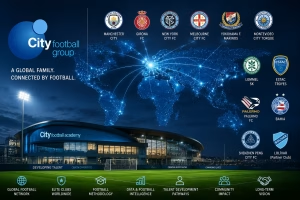
Match Tour 11 is also the exclusive City Football Group partner for Canada, providing Canadian access to the CFG network and Manchester City Football School camp experiences. The agency has supported over 500 players, delivered over 50 international trips, and worked with professional clubs across Spain, Italy, Austria, and England.
For players who are ready to compete at the professional level, Match Tour 11 also provides Player Management and Professional Signings, including player assessment, club identification, placement support, contract process guidance, and continued support after signing.
How Far in Advance Should You Plan a Football Tour to Europe?
Teams should usually begin planning an international football tour to Europe several months before departure. Larger groups, school programs, and academy teams may need even more time because of family communication, fundraising, document collection, payment schedules, and player availability.
Early planning gives the provider more time to secure suitable facilities, match opponents, hotel blocks, transportation, and professional match opportunities. It also gives coaches time to prepare players physically and tactically.
A practical planning timeline may look like this:
- Define the tour objective and target travel window.
- Confirm the approximate group size and age level.
- Choose the destination and preferred itinerary structure.
- Review package inclusions, pricing, and payment deadlines.
- Present the tour to families and collect commitments.
- Collect documents, medical details, and consent forms.
- Prepare players with training, meetings, and expectations.
- Finalize itinerary, rooming, travel details, and communication plans.
The earlier the process begins, the more professional the experience usually feels for coaches, players, and families.
What Should a Sample European Football Tour Itinerary Include?
Every team needs a customized itinerary, but a balanced seven- to ten-day tour may include a structure like this:
- Arrival in Europe, airport pickup, hotel check-in, team orientation, and recovery.
- First training session at a professional or high-quality local facility.
- Friendly match against a local club or academy-level opponent.
- Stadium tour, professional club visit, or cultural city experience.
- Second training session focused on tactical adjustments.
- International tournament match or second friendly match.
- Live professional football match where schedules allow.
- Recovery session, team activity, and coach-led development review.
- Final match, closing meeting, and player reflection.
- Departure and post-tour follow-up.
This type of structure gives players a serious football experience without overloading the schedule. The tour should feel challenging, but not chaotic.
Common Mistakes to Avoid Before Booking
Planning mistakes can reduce the value of an international football tour to Europe. Coaches should watch for these common issues before signing off on a package.
Choosing the Cheapest Option Without Comparing Value
Lower cost may mean weaker facilities, less reliable transport, poor match quality, limited support, or unclear inclusions. Teams should compare value, not only price.
Accepting Vague Match Promises
Terms like “elite opposition” or “professional academy matches” should be explained clearly. Coaches should ask what level of opponent is realistic for the team.
Overloading the Itinerary
Too many activities can make the tour look attractive on paper but reduce player performance. Recovery is part of good planning.
Ignoring Parent Communication
Families need clear information about cost, safety, supervision, documents, travel, and expectations. Poor communication creates avoidable pressure for coaches.
Treating Trials as Guaranteed Outcomes
Professional trials and signings depend on player quality, club needs, timing, and performance. Responsible providers should be honest about what is possible.
How Coaches Can Extend the Value After the Tour
The value of a European football tour should continue after the team returns home. Coaches can use the experience to strengthen training, team culture, and player development plans.
Useful post-tour actions include:
- Holding a team review meeting.
- Reviewing match footage and tactical lessons.
- Asking players to reflect on what challenged them most.
- Updating individual development goals.
- Sharing key takeaways with parents.
- Applying European training concepts to the next training cycle.
Coaches can also use external education resources such as the FIFA Training Centre and UEFA coach education resources to support ongoing staff development before and after the tour.
Is a European Football Tour Worth It for Your Team?
An international football tour to Europe is worth it when the experience is planned with a clear football purpose, appropriate competition, professional training, safe logistics, and honest communication.
For players, the tour can build confidence, maturity, independence, tactical awareness, and motivation. For coaches, it can create teaching moments that are difficult to recreate at home. For academies and clubs, it can strengthen program identity and provide a meaningful development experience for committed players.
The key is not simply going to Europe. The key is building a tour that fits the team’s level, goals, budget, and long-term development pathway.
Plan a Successful European Football Tour With Match Tour 11
A successful international football tour to Europe starts with the right planning partner. Your team needs more than hotels and sightseeing. You need a football-first structure built around training quality, competitive matches, player welfare, cultural experience, and professional coordination.
Match Tour 11 helps teams, academies, school programs, clubs, and players connect with professional football environments across Europe through customized tours, training camps, player trials, and pathway support.
If your team is preparing to book a European football tour, contact Match Tour 11 to discuss your destination options, player level, travel window, and the right development structure for your group.