European Club Environments for Young Player Growth
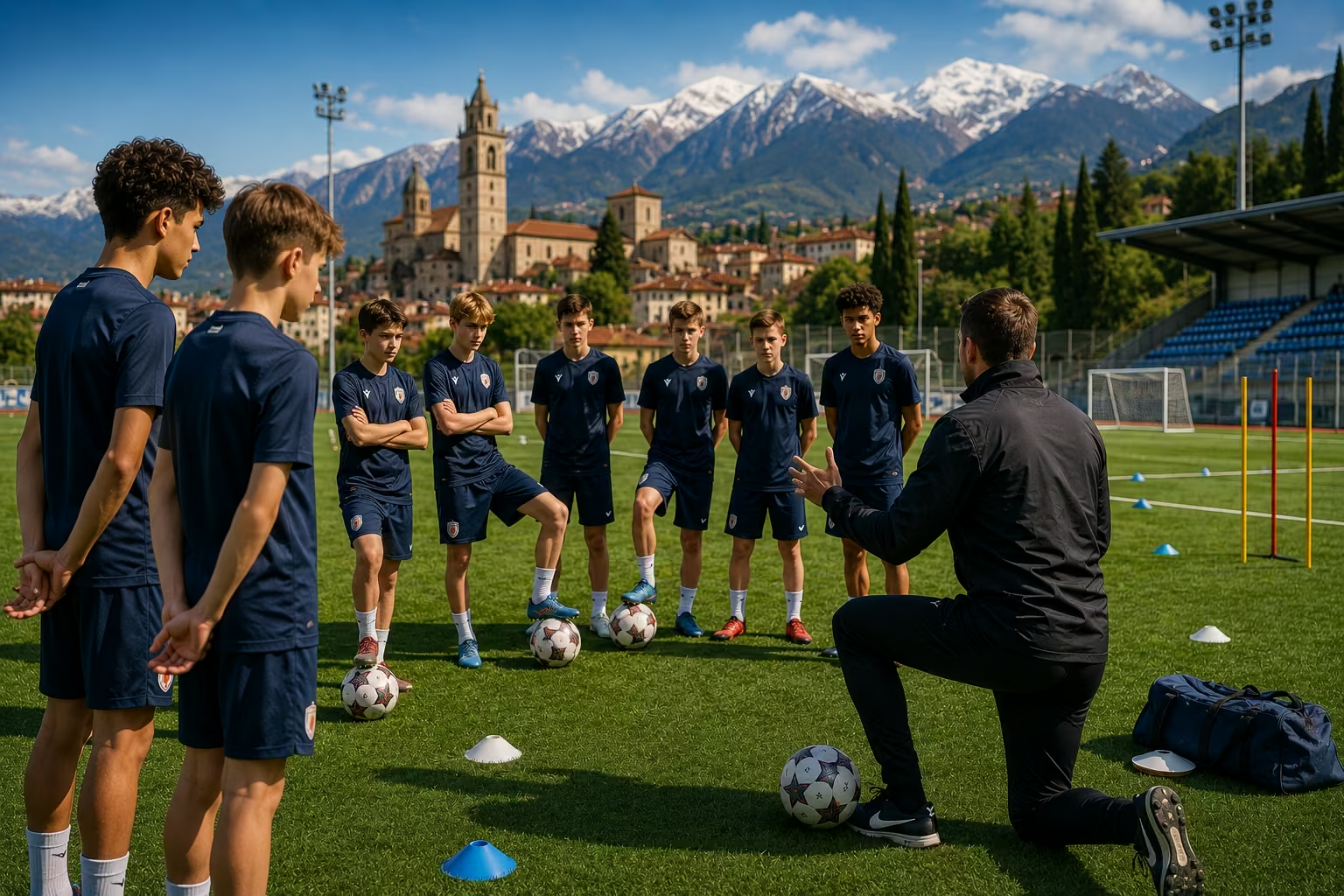
Youth football development abroad can change how young players understand the game. When players leave their familiar home environment and enter a European football setting, they are exposed to different coaching standards, match rhythms, tactical expectations, cultural habits, and professional behaviours.
For players, parents, coaches, academy directors, and school football programs, the value is not simply that a team travels overseas. The value comes from what the player learns when the football environment becomes unfamiliar, more demanding, and more specific.
At home, players often know the opponents, coaches, fields, league habits, and weekly routine. Abroad, they must adapt. They may train at professional facilities, compete against organized local teams, receive different coaching cues, manage travel, communicate across cultural differences, and learn what higher football standards look like in daily practice.
Match Tour 11 builds international football experiences around this development purpose. Through international football tours, training camps, tournaments, player trials, and player evaluations, the company helps players and teams access football environments that provide practical learning, not just travel memories.
Why Home Environments Can Limit Player Perspective
Home environments are important. Players need consistent coaching, regular matches, strong club culture, and long-term development plans. However, a familiar environment can also hide weaknesses. A player may be comfortable because they know the tempo, the opponents, the coaching style, and the expectations.
That comfort can create a false sense of readiness. A technically strong player may look composed in local competition but struggle when pressed faster abroad. A forward may score regularly at home but find it difficult against defenders who read movement earlier. A midfielder may control local matches but lose time and space against compact European opposition.
Youth football development abroad helps reveal those details. It places players in new football situations where they must solve different problems. The point is not to make players feel overwhelmed. The point is to create a clearer benchmark.
For coaches, this is valuable because international environments often expose development needs more quickly than normal league play. For parents, it provides a more realistic view of what the player does well and what must improve. For players, it can create the motivation and awareness needed for the next stage of growth.
1. Players Learn That Speed of Thought Matters
One of the first lessons players often learn abroad is that speed of thought matters as much as speed of movement. In many European club environments, players are expected to scan earlier, receive with better body shape, make decisions faster, and understand the next action before the ball arrives.
This can be a major adjustment for youth players. At home, a player may have enough time to take extra touches, look up late, or recover from a poor first touch. Abroad, those habits may be punished more quickly. The opponent may press earlier. Passing lanes may close faster. Teammates may expect quicker ball circulation.
Technical ability is still important, but technical ability must serve decision-making. A clean first touch matters because it creates the next action. A pass matters because it solves a tactical problem. A dribble matters because it creates an advantage, not because it looks impressive.
This is one of the strongest benefits of youth football development abroad. Players learn that football intelligence is not abstract. It shows up in small moments: scanning, timing, angles, body position, communication, and composure under pressure.
2. European Training Sessions Demand Better Detail
European club environments can expose young players to a higher level of training detail. Sessions may focus on small technical and tactical behaviours that players often overlook: receiving across the body, opening passing lanes, defending in relation to teammates, pressing triggers, support angles, and movement after passing.
At home, players may hear similar coaching points, but the intensity and repetition abroad can make those details more obvious. When every player in the session is expected to understand spacing and timing, the standard becomes clear.
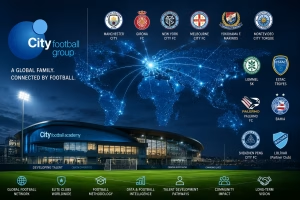
Match Tour 11’s training camps can support this type of learning. The company delivers independent camps at top European club facilities with qualified coaches, as well as official City Football Group training camps across Canada under the Manchester City Football School brand.
For young players, this exposure can change training habits. They begin to understand that development is not only about working hard. It is about working with precision. A player who trains with better detail will usually return home with a sharper understanding of what daily improvement requires.
3. Competition Abroad Exposes Tactical Gaps
International matches can reveal tactical gaps that local games do not always expose. A team may be successful at home because it is physically stronger, faster, or more experienced than local opponents. Abroad, those advantages may not be enough.
A youth player may face opponents who defend more compactly, move intelligently between lines, press with better coordination, or transition faster after winning the ball. These situations force players to think tactically.
For example, a winger may need to learn when to stay wide and when to come inside. A fullback may need to understand when to overlap, hold position, or protect against transition. A midfielder may need to receive under pressure while still protecting the team shape. A centre-back may need to build play calmly while managing space behind the line.
Youth football development abroad becomes valuable because players feel these problems directly. Tactical learning becomes less theoretical. The player experiences the consequence of poor spacing, late scanning, weak pressure, or slow transition.
For coaches, this creates strong teaching material. Post-match reviews, training corrections, and individual feedback become more meaningful because the players have lived the problem.
4. Players Develop Football Maturity Through Travel
Development does not only happen during training and matches. Travel can also build football maturity. Players must manage schedules, time zones, meals, hydration, sleep, recovery, equipment, team meetings, transportation, and cultural differences.
These details matter because serious football requires professional habits. A player who wants to compete at higher levels must learn to prepare consistently. Poor sleep, poor nutrition, lateness, weak focus, and poor recovery can affect performance quickly.
International travel makes these habits visible. Coaches can see who arrives prepared, who manages stress, who communicates well, who leads, who needs support, and who struggles when routine changes.
This is especially useful for academy directors and school football programs. An overseas football experience can show how players behave outside the normal structure. It tests independence, responsibility, emotional control, and group standards.
Match Tour 11’s international football tours include not only football activities but also accommodation, ground transportation, meals, cultural experiences, and full tour coordination. That structure helps teams focus on development while still exposing players to the demands of international travel.
5. Players Learn to Compete Without Familiar Advantages
Young players often build confidence in familiar conditions. They know the field. They know the referee style. They know the opponent. They know the rhythm of the league. Abroad, those advantages disappear.
This can be uncomfortable, but it is useful. A player must compete without relying only on familiarity. They must read the game, adjust to the opponent, manage emotions, and find ways to contribute even when the environment feels different.
For players from Canada and North America, competing in Europe can provide a different reference point. The game may feel more technical, more tactical, more physical, or simply more demanding in its details. That difference can help players understand what is required beyond their local context.
The goal is not necessarily to dominate every match. The goal is to adapt and learn. A player who struggles early but improves across the tour may show strong development potential. A player who remains focused after mistakes may show maturity. A player who listens and applies feedback may gain more from the experience than a player who only performs well when conditions are easy.
6. European Club Culture Shows What Daily Standards Look Like
Many young players admire European football from a distance. They watch professional matches, follow clubs, and know famous players. But seeing a club environment in person can change the way they understand the sport.
European club settings can show players how football standards appear in daily routines. Training facilities, staff organization, session structure, recovery habits, communication, and player behaviour all contribute to the environment.
This exposure is useful because it makes professionalism more concrete. Young players begin to understand that higher-level football is not only about talent. It is about repeatable behaviour. Players must train with concentration, respect the schedule, communicate, recover properly, and maintain standards every day.
Match Tour 11 works across professional football environments in countries such as Spain, Italy, Austria, and England. For teams and players, this access can help connect ambition with reality. A player may return home with a clearer view of what daily work should look like.
7. Players Receive a More Honest Development Benchmark
One of the most important outcomes of youth football development abroad is a better benchmark. Players and families often want to know where a player stands, but local success does not always answer that question fully.
International football can provide a more honest comparison. A player may discover that their technical level translates well. They may also discover that they need to improve physical strength, defensive concentration, tactical awareness, communication, or decision-making speed.
This benchmark should be used constructively. The purpose is not to label a player as good or not good enough. The purpose is to identify the next stage of development. A player may need more domestic competition, a stronger training environment, additional match footage, a future international tour, or, in some cases, individual evaluation.
Match Tour 11 also supports player trials and evaluations for players who are ready for formal assessment inside professional club environments. These opportunities are separate from team tours and depend on the player’s level, profile, readiness, timing, and club fit.
8. International Experiences Build Confidence With Context
Confidence matters in youth football, but it should be grounded in reality. International experiences can help players build confidence because they learn that they can handle new environments, not because they are told they are talented.
A player who trains abroad, competes against unfamiliar opposition, communicates with new teammates, and adapts to different coaching can return home with stronger self-belief. That confidence is useful because it is based on experience.
At the same time, the player may also return with humility. They may understand that there are levels to the game. They may realize that development requires more detail and consistency than they previously believed.
This balance is valuable. Strong players need confidence and humility. They need ambition, but also a clear view of the work required. Youth football development abroad can help create that balance when the experience is framed properly.
9. The Right Abroad Experience Can Shape the Next Pathway Step
An international football experience should not end when the player returns home. The best value comes from connecting the experience to the next development step.
For some players, the next step may be better weekly training. For others, it may be a domestic or international camp. Some teams may use the experience to plan future international tournaments. Advanced players may need a player profile review and possible trial pathway discussion.
For players ready to pursue professional opportunities, Match Tour 11 also provides player management and professional signings. This includes assessing the player profile, identifying suitable clubs, facilitating placement, supporting the contract process, and staying involved after signing.
The key is timing. Not every young player should chase a trial immediately after traveling abroad. Some need more development. Some need stronger match footage. Some need to mature physically or mentally. The correct pathway should be based on football evidence, not emotion.
What European Club Environments Teach That Home Often Cannot
Home environments can teach many important football lessons, but European club environments can add a different layer of learning. They can show players what happens when football is embedded deeply into daily culture, club identity, and development systems.
Players may learn that technical details must be executed faster. They may see that tactical discipline is expected even from creative players. They may understand that body language matters. They may realize that coaches value players who solve problems, not only players who show isolated talent.
Young players may also learn that the pathway is competitive. There are many players with ability. The difference often comes from consistency, coachability, intelligence, professionalism, and the ability to keep improving.
This is difficult to understand fully from home. Watching football on television is not the same as training in the environment, competing against local players, or receiving feedback from professional coaches.
How Coaches and Academies Can Maximize Development Abroad
Coaches and academy directors should treat an international experience as part of a development cycle. The preparation, tour delivery, and follow-up all matter.
Before the trip
- Define the football purpose of the experience.
- Prepare players for different styles of play.
- Set standards around punctuality, recovery, behaviour, and communication.
- Clarify that the objective is development, not only results.
- Identify tactical themes to observe during matches abroad.
During the trip
- Observe how players adapt to training and competition.
- Use short team meetings to connect experiences to learning points.
- Protect recovery time between activities.
- Track leadership, coachability, communication, and emotional control.
- Encourage players to reflect on what feels different from home.
After the trip
- Hold individual or group reviews.
- Update development plans based on what the experience revealed.
- Use video and coach notes to reinforce learning.
- Connect the tour to future camps, tournaments, trials, or training goals.
- Communicate realistic outcomes to players and families.
This approach turns the trip into more than a one-time event. It becomes a reference point for long-term player growth.
What Parents Should Understand Before Sending a Player Abroad
Parents should view youth football development abroad as a learning opportunity, not a guaranteed pathway to professional football. The best outcomes are often practical: a player understands the standard better, identifies weaknesses, builds maturity, and returns with stronger habits.
Parents should ask whether the opportunity is appropriate for the player’s age, level, maturity, and goals. A younger player may benefit from a team tour or training camp. An older, advanced player may eventually need an individual trial or evaluation. The right choice depends on readiness.
Families should also be cautious with exaggerated promises. No credible provider should guarantee trials, contracts, scouting outcomes, or professional signings from a development trip. Serious football pathways are based on level, fit, timing, and evaluation.
The most useful question is not “Will this make my child professional?” The better question is “Will this experience help the player grow, understand the game better, and make smarter next-step decisions?”
How Match Tour 11 Supports Youth Football Development Abroad
Match Tour 11 is an international football agency and sports tourism brand founded in 2018 and based in North Vancouver, British Columbia. The company operates across North America and Europe, connecting players, teams, clubs, academies, and school football programs with professional football environments.
The company has supported over 500 players, delivered over 50 international trips, and worked with professional clubs across Spain, Italy, Austria, and England. Match Tour 11 is also a FIFA-recognized international football agency and the exclusive City Football Group partner for Canada.
For youth players and teams, Match Tour 11 can support development through international football tours, training camps, international tournaments, player trials, and player evaluations. For professional-ready players, the company can also provide player management and signing support.
This matters because youth football development abroad requires more than travel planning. It requires football judgment, appropriate competition, reliable logistics, clear communication, and realistic pathway context.
Match Tour 11’s role is to help players and teams access credible football environments while understanding what each experience can and cannot provide.
Useful Football Development Resources
Players, parents, and coaches can use credible resources to better understand football development standards. The FIFA Training Centre provides global development content for players and coaches. UEFA offers information on coach development, coaching courses, and grassroots football programmes. Canadian players and families can also review the Canada Soccer ecosystem to understand the domestic development structure.
These resources help families and coaches frame international football experiences as part of a broader development process, not as isolated events.
Common Questions About Youth Football Development Abroad
Does training abroad make youth players better?
Training abroad can help players improve when the experience is connected to feedback, reflection, and continued work after returning home. The environment creates the lesson, but the player must apply it consistently.
Is Europe always better for development than Canada or North America?
No. Strong development can happen at home when coaching, competition, and training standards are high. Europe can add a valuable benchmark by exposing players to different football environments, but it should complement long-term development rather than replace it.
Can a youth football tour lead to a trial?
Sometimes, but it should not be assumed. A trial depends on the player’s level, readiness, profile, timing, club fit, and availability.
What age is best for football development abroad?
The right age depends on maturity, team goals, travel readiness, and football purpose. Younger players may benefit from team tours and camps, while older advanced players may use international experiences as a pathway benchmark.
What should players focus on abroad?
Players should focus on adapting quickly, scanning earlier, communicating clearly, applying feedback, competing with discipline, and understanding what the environment teaches about their current level.
Final Thoughts on Development Abroad
Youth football development abroad can give players lessons that are difficult to recreate at home. European club environments can expose players to faster decisions, sharper technical expectations, different tactical problems, stronger daily standards, and a clearer view of the pathway.
The value is strongest when the experience is planned properly. Teams need suitable competition. Players need realistic expectations. Coaches need clear development objectives. Parents need honest communication. The experience should challenge players without pretending to guarantee outcomes.
For young players, the most important result may be a change in perspective. They return home understanding the game differently. They train with more purpose. They recognize what must improve. They become more mature, more adaptable, and more aware of the standards beyond their local environment.
To discuss youth football development abroad for a player, team, academy, school program, or club, contact Match Tour 11 with the age group, level, preferred destination, travel window, and development objectives.