Spanish Football Travel for Teams, Academies, and School Programs

Football tours to Spain give teams more than a travel experience. When planned properly, they place players inside serious football environments where training standards, match intensity, tactical detail, and team culture are tested in a different way.
For coaches, academy directors, school football programs, club managers, and parents, the value is not simply that players visit Europe. The value is that players train, compete, recover, travel, and learn in a setting where football is part of daily life.
Match Tour 11 builds football tours to Spain around that principle. The objective is to create practical, professionally coordinated tours that combine football development, competitive exposure, cultural education, and reliable logistics. Madrid, Marbella, Seville, and Girona each offer a different type of football environment, which allows teams to choose a destination based on level, goals, calendar, and preferred experience.
What Makes Spain a Strong Destination for Football Development?
Spain is one of the most respected football development countries in the world. Its club structure, technical style, coaching culture, academy systems, and match environments make it a serious destination for teams that want more than a standard overseas trip.
For youth teams and academies, Spain can expose players to a different rhythm of play. Sessions often emphasize technical speed, positional awareness, decision-making under pressure, and the ability to solve problems in tight spaces. For older teams, semi-professional groups, and school programs, the country can provide a strong balance of competition, education, travel, and group development.
Football tours to Spain are especially useful when a team wants to step outside its domestic routine. Players experience new coaching references, unfamiliar opponents, different match conditions, and the expectation to adapt quickly. That adaptation process is often one of the most valuable parts of the tour.
Match Tour 11 approaches Spain tours as football-first experiences. The travel components matter, but they support the football objective. Training quality, match suitability, player welfare, itinerary balance, and communication are all part of the planning process.
How Match Tour 11 Structures Football Tours to Spain
Match Tour 11 organizes end-to-end football tours for teams traveling to Europe. For Spain, that can include professional training, competitive matches, stadium experiences, live professional football where schedules allow, accommodation, meals, local transportation, cultural activities, and full tour coordination.
The structure depends on the team. A youth academy may want a high-performance week with several training blocks and carefully selected matches. A school football program may need a broader educational itinerary that includes football, culture, group travel, and supervised activities. A semi-professional or amateur club may prioritize competitive fixtures and exposure to Spanish training environments.
That flexibility matters because football tours to Spain should not be copied and pasted from one team to another. Age, level, travel experience, budget, time of year, roster size, coaching objectives, and player maturity all affect the final itinerary.
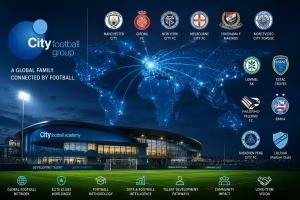
As a FIFA-recognized international football agency and exclusive City Football Group partner for Canada, Match Tour 11 brings a football network into the planning process. That network helps the company design tours that are grounded in real football contacts, not generic travel packaging.
1. Madrid Football Tours: Elite Club Culture and High-Level Competition
Madrid is one of the strongest destinations for teams that want exposure to a major European football city. It offers a serious football atmosphere, strong local opposition, elite academy references, and access to a city where professional football is visible everywhere.
For many teams, Madrid is the natural entry point for football tours to Spain because it can combine training, matches, stadium visits, professional club culture, and cultural experiences in one destination. Depending on timing, level, and availability, teams may have opportunities to compete against strong Spanish opposition, including academy-level opponents connected to clubs such as Real Madrid academy sides, Atletico Madrid academy, CD Leganes, and others.
The key is suitability. A match should challenge the team without becoming unrealistic or unproductive. Match Tour 11 works to align competition with the group’s age, level, and development goals. A younger team may benefit from technical and tactical learning against organized Spanish opponents. An older academy team may need faster match tempo, greater physical demand, and more tactical complexity.
Madrid also works well for coaches who want their players to understand the standards around professional football. The city gives teams a direct view of how football, preparation, facilities, support staff, and club identity connect at a high level.
2. Marbella Football Tours: Training Conditions and Team Focus
Marbella is a strong option for teams that want a focused training environment in a destination known for quality facilities and a practical team-camp feel. It can be especially useful for clubs, academies, and school programs that want to combine structured football work with recovery, team bonding, and a manageable travel rhythm.
A Marbella itinerary may include professional training sessions, competitive fixtures, video or tactical meetings where appropriate, recovery windows, and local experiences. The destination can work well for teams preparing for a season, building cohesion, or giving players a controlled international football experience without the pace of a larger city schedule.
Football tours to Spain do not always need to be built around the biggest stadiums or most famous cities. For many teams, the best result comes from choosing a location that supports consistent training quality, rest, nutrition, and group management. Marbella can offer that type of environment when the objective is development and team performance.
For individual players within a team setting, Marbella-style environments can also reveal important habits. Coaches can assess how players prepare, recover, communicate, adapt to coaching, and respond to a different standard of daily football work.
3. Seville Football Tours: Spanish Football Identity and Competitive Learning
Seville offers a distinct football culture. It can suit teams that want to experience a passionate Spanish football city while still building a serious development-focused itinerary.
For academy and school groups, Seville can provide a strong balance between football and culture. Players can train, compete, and then experience a city with deep sporting and cultural identity. This balance can be valuable for younger players because it helps them understand football as part of a broader international experience.
From a football perspective, Seville can be useful for teams that want to test concentration and adaptability. Playing away from familiar surroundings requires players to manage travel, climate, food, language, refereeing differences, match-day timing, and new styles of opposition. Those details are part of development.
Match Tour 11 can also connect Seville-based experiences to broader pathway conversations where relevant. For players who show the right level and maturity, Spain may also become a reference point for future player trials and evaluations. This should be approached realistically. A team tour does not guarantee a trial or signing, but it can help players and families understand the standard more clearly.
4. Girona Football Tours: City Football Group Context and Modern Development Standards
Girona is a valuable destination for teams that want a modern European football environment with a strong development lens. It is also relevant to Match Tour 11’s position as the exclusive City Football Group partner for Canada, which gives Canadian teams and players a connection point into the CFG network.
Girona can work well for teams that want a more focused football setting than a larger capital city. The destination can support training, matches, professional club exposure where available, and a clear view of how a modern European football environment operates.
Football tours to Spain that include Girona may be especially relevant for Canadian teams, academies, and school programs that want to connect the tour experience with broader player development conversations. Match Tour 11’s City Football Group partnership gives the brand a specific football credibility point in this area, particularly for Canadian access to the CFG network.
As with every destination, availability, timing, team level, and partner schedules shape what can be delivered. The most effective Girona itinerary is one that matches the team’s football objectives rather than forcing unnecessary activities into the schedule.
What Should Be Included in a Professional Spain Football Tour?
A professional Spain football tour should include clear football objectives, suitable training, competitive matches, safe accommodation, ground transportation, meals, recovery time, cultural experiences, and full itinerary coordination.
For teams, the details matter. A poorly balanced tour can leave players tired, distracted, or underprepared. A well-built tour gives players enough football intensity to develop, enough recovery to perform, and enough cultural exposure to make the experience memorable.
Core elements to consider
- Professional training sessions at appropriate facilities.
- Competitive matches against opponents matched to the team’s level.
- Accommodation that supports supervision, recovery, and team logistics.
- Ground transportation planned around training, matches, meals, and activities.
- Meal planning that respects player routines and travel demands.
- Stadium tours or live professional football where schedules and availability allow.
- City and cultural experiences that fit the age and purpose of the group.
- Clear communication before, during, and after the tour.
Match Tour 11’s international football tours are designed around these requirements. The company’s role is not only to organize travel. It is to manage the football experience, coordinate the moving parts, and help teams use the trip as a development tool.
How Do Football Tours to Spain Help Players Improve?
Football tours to Spain help players improve by placing them in unfamiliar football environments where they must adapt technically, tactically, physically, and mentally.
A player may be comfortable in a domestic league, but Spain can expose different demands. Opponents may press differently, combine faster, use space more intelligently, or punish poor decisions more quickly. Training sessions may require better first touch, sharper scanning, and more disciplined positioning.
This does not mean every player will immediately perform better. In fact, part of the value is that some players struggle at first. Coaches can see who adapts, who communicates, who responds to feedback, and who stays engaged when the environment becomes less familiar.
For parents and development leads, this creates a more honest view of the player. A Spain tour can show strengths, gaps, habits, and areas for improvement. That information can support future training plans, academy decisions, and pathway conversations.
How Coaches and Academy Directors Can Use a Spain Tour Strategically
For coaches and academy directors, football tours to Spain should connect to a larger development plan. The tour should not be treated as a one-off reward or vacation. It should support team standards, player education, staff learning, and long-term program credibility.
Before the tour, staff can define objectives. These may include improving team identity, exposing players to European football, preparing for a season, evaluating players in a demanding environment, or strengthening recruitment value for the academy.
During the tour, coaches can observe players in ways that normal league play may not reveal. Travel behavior, punctuality, nutrition habits, leadership, response to fatigue, emotional control, and coachability all become visible.
After the tour, the experience should be reviewed. Coaches can hold player meetings, update development plans, create video feedback, and communicate outcomes to families. This is where the trip becomes more than a memory. It becomes part of the program’s development framework.
Practical Planning Checklist for Spain Football Tours
A successful tour starts with clear planning. The earlier a team defines its objectives, the easier it becomes to build an itinerary that is realistic and useful.
Before confirming the tour
- Define the main purpose: development, competition, team bonding, exposure, education, or preseason preparation.
- Confirm the age group, roster size, staff numbers, and supervision requirements.
- Identify the preferred destination: Madrid, Marbella, Seville, Girona, or a multi-city itinerary.
- Decide how many training sessions and matches are appropriate.
- Review travel windows, school calendars, competition schedules, and player availability.
- Clarify budget expectations with families or club leadership early.
- Build in recovery time instead of overloading the itinerary.
- Ask how the tour connects to the team’s development plan after returning home.
Teams that complete this work early usually get more value from football tours to Spain because the itinerary can be built around real objectives rather than assumptions.
Example Spain Tour Scenarios
Youth academy team from Canada
A Canadian academy group may want to use Spain as a benchmark. The tour could include training in Madrid, competitive matches against Spanish opposition, a stadium experience, and educational sessions around professional standards. For this type of group, the goal is not only competition. It is helping players understand the daily demands of European football.
School football program
A school program may need a balanced itinerary that combines football, culture, safety, and supervision. Seville or Madrid can work well because players can train and compete while also experiencing Spanish history, city life, and group travel. The football remains central, but the educational value is also important.
High-performance club team
A competitive club team may prefer Marbella or Girona if the priority is focused training, controlled logistics, and strong opposition. This type of tour can be used for preseason preparation, team cohesion, or testing players before a major domestic competition.
Players exploring future pathway options
Some players may use the team tour as a first reference point before considering future pathway services. If a player is ready for a more individual process, Match Tour 11 also offers player trials and evaluations and player management and professional signings. These services are separate from a team tour and depend on the player’s level, profile, readiness, and club suitability.
How Spain Tours Connect With Training Camps and Player Pathways
Football tours to Spain can sit alongside other development experiences. A team may travel to Spain for matches and training, then later send selected players into more specific evaluation environments. Another group may use domestic training camps as preparation before traveling internationally.
Match Tour 11 delivers independent camps at top European club facilities and official City Football Group training camps across Canada under the Manchester City Football School brand. For Canadian players, this creates a practical bridge between local development, international exposure, and higher-level pathway conversations.
It is important to keep expectations realistic. Not every player needs a trial. Not every team needs a high-performance itinerary. Not every trip should be built around scouting. The right pathway depends on the player, the team, the timing, and the level.
For development leads, this is where Match Tour 11’s broader service model becomes useful. The company can support football tours, international tournaments, training camps, trials, and player management depending on the objective.
Why End-to-End Logistics Matter
Football tours to Spain require more than booking flights and fields. A team itinerary has many moving parts, and small planning errors can affect the football outcome.
Transportation must work with session times. Meals must fit training and match schedules. Accommodation must support team supervision. Recovery windows must be protected. Match days need clear timing, communication, equipment planning, and contingency thinking.
For coaches and managers, this is where an experienced football tour partner can reduce operational pressure. Instead of staff trying to manage every local detail while also coaching the team, Match Tour 11 coordinates the tour structure so staff can focus on players.
This is especially important for teams traveling internationally for the first time. Families need clear communication. Players need structure. Coaches need reliable planning. Club leaders need confidence that the experience reflects well on the organization.
What Should Teams Ask Before Booking a Spain Football Tour?
Before booking, teams should ask whether the tour provider understands football, can match opponents appropriately, can explain the itinerary clearly, and can support the group from planning through delivery.
Useful questions for coaches and managers
- What football outcomes should this tour support?
- How are training sessions selected and coordinated?
- How are match opponents matched to age and level?
- Which destination best fits our team: Madrid, Marbella, Seville, or Girona?
- How much recovery time is built into the itinerary?
- What is included in accommodation, transport, meals, and activities?
- How will families receive information before departure?
- What happens if a club, facility, fixture, or schedule changes?
The answers should be clear and practical. A strong provider will not promise guaranteed outcomes, specific opponents, professional contracts, or scouting results. Instead, they will explain what can be planned, what depends on availability, and how they manage the football and travel experience responsibly.
Useful Football Development References for Coaches and Parents
Teams planning football tours to Spain can also benefit from reviewing broader development resources. The FIFA Training Centre provides global football development content. UEFA also offers useful material on coach development, coaching courses, and grassroots football programmes. Canadian teams can also review the Canada Soccer ecosystem to understand the domestic development structure.
These resources help coaches and families frame the tour properly. The goal is not simply to travel abroad. The goal is to create a football experience that supports learning, development, and better decision-making.
Why Choose Match Tour 11 for Football Tours to Spain?
Match Tour 11 is based in North Vancouver, British Columbia, and works internationally across North America and Europe. Since 2018, the company has supported players, teams, clubs, academies, and school football programs through tours, camps, trials, evaluations, player management, and professional signing support.
The company has supported over 500 players, delivered over 50 international trips, and worked with professional clubs across Spain, Italy, Austria, and England. That background matters because football tours to Spain require football knowledge, not only travel coordination.
For teams, Match Tour 11’s value is practical. The company can help define the right destination, shape the football schedule, coordinate logistics, build a balanced itinerary, and connect the experience to broader development pathways when appropriate.
For players and parents, the value is clarity. A Spain tour can provide exposure to a higher standard, but it should not be sold as a guaranteed professional pathway. Match Tour 11’s role is to create credible football environments, provide honest context, and support next steps where the player’s level and situation justify it.
Final Thoughts on Planning a Better Spain Football Tour
Football tours to Spain can be one of the most valuable international experiences a team can take, but only when the trip is planned with football purpose. Madrid, Marbella, Seville, and Girona each offer different strengths. The best choice depends on the team’s level, age, goals, travel window, and desired balance between training, matches, culture, and recovery.
For coaches and academy directors, the most important question is not simply where to go. It is what the tour should achieve. A strong itinerary should challenge players, support staff objectives, protect welfare, and create a clear development reference point after the team returns home.
Match Tour 11 delivers football tours to Spain for teams that want a credible, practical, and football-first international experience. Whether the objective is team development, competitive exposure, school travel, academy benchmarking, or a broader connection to European football environments, the process should begin with a clear conversation.
To discuss Madrid, Marbella, Seville, Girona, or a customized Spain itinerary, contact Match Tour 11 and outline your team’s age group, level, preferred travel window, and football objectives.