Madrid Football Beyond the Giants
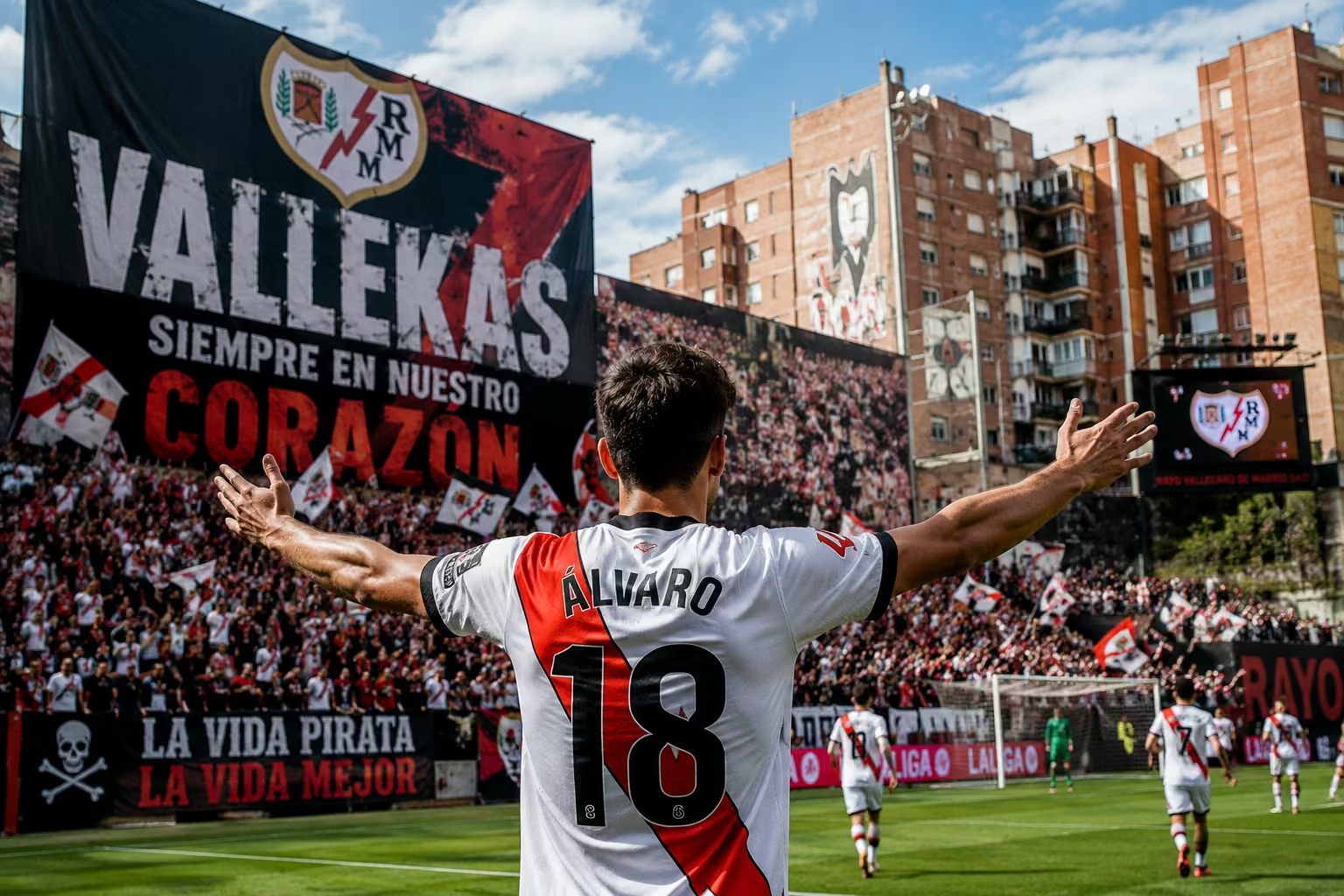
Rayo Vallecano is one of Spanish football’s clearest reminders that football identity is not only built through trophies, global marketing, or stadium size. In Madrid, where Real Madrid and Atlético Madrid dominate the international conversation, Rayo exists differently. It is smaller, louder, more local, and deeply tied to the neighbourhood that shaped it.
Based in Vallecas, a working-class district of Madrid, Rayo Vallecano has built a reputation as a club that refuses to disappear into the background. Its stadium is compact. Its fan culture is direct. Its story is built around survival, resistance, community, and a repeated ability to make larger clubs uncomfortable.
For players, coaches, academy directors, parents, and teams studying football culture in Spain, Rayo Vallecano offers a valuable lesson. The professional game is not only about elite facilities and global brands. It is also about environment, identity, pressure, belonging, and the ability to compete with conviction when resources are limited.
That is why Rayo Vallecano deserves attention. The club represents a side of La Liga that is raw, local, emotional, and difficult to ignore.
Who Are Rayo Vallecano?
Rayo Vallecano is a professional football club from Madrid, Spain, founded in 1924 and based in the Vallecas area of the city. The club plays its home matches at Vallecas Stadium, a compact ground that has been Rayo’s home since 1976.
Unlike Madrid’s global superclubs, Rayo is defined by its neighbourhood scale. The club’s identity comes from its direct relationship with Vallecas, a district known for working-class roots, community pride, and a strong sense of local belonging.
That local identity is central to how people understand Rayo. The club has spent much of its history fighting for position rather than dominating from the top. Promotions, relegations, survival battles, and unexpected achievements are all part of the story.
This makes Rayo Vallecano especially interesting for anyone studying Spanish football culture. It shows that a club can matter without being the biggest. It shows that atmosphere, identity, and community can become competitive assets.
1. Rayo Vallecano Represents Vallecas Before Anything Else
To understand Rayo Vallecano, you have to understand Vallecas. The club is not simply located there. It is shaped by the district’s identity.
Vallecas has long carried a working-class reputation within Madrid. That social background matters because it influences how the club is seen and how its supporters see themselves. Rayo is often described as a neighbourhood club, and that description is not decorative. It is central to the club’s meaning.
For many clubs, location is part of branding. For Rayo, location is the brand. The club’s relationship with Vallecas is visible in the stadium, the support, the match-day feeling, and the way outsiders talk about the team.
This is one reason Rayo refuses to be ignored. The club carries a clear identity in a football world where many clubs can feel increasingly polished and commercial. Rayo’s strength is that it still feels attached to a place.
2. Vallecas Stadium Gives Rayo a Different Kind of Power
Vallecas Stadium is not one of Spain’s largest grounds, but that is part of its importance. Its compact layout creates a direct relationship between the pitch, the stands, and the surrounding neighbourhood.
The stadium does not create intimidation through size. It creates pressure through proximity. Opponents feel close to the supporters. The crowd feels close to the pitch. The neighbourhood feels close to the match.
For players, that kind of environment can be educational. It shows how football pressure is not only created by massive attendance numbers. It can also come from intensity, noise, closeness, and the emotional weight of representing a community.
For teams visiting Spain through football tours, this kind of club environment is valuable to understand. It gives players a different reference point from the superclub experience. A stadium like Vallecas teaches that football culture can be powerful even when the setting is modest.
3. Rayo’s Working-Class Identity Gives the Club Its Edge
Rayo Vallecano’s working-class identity is one of the most discussed aspects of the club. It gives Rayo a clear emotional position within Spanish football: smaller than the giants, but unwilling to play small in attitude.
This identity affects how people interpret the club’s achievements. When Rayo survives in La Liga, defeats a bigger opponent, or reaches a major milestone, the result often feels larger than the table. It becomes a neighbourhood story.
That matters because football clubs are not only sporting institutions. They are cultural institutions. They carry memory, pride, frustration, and local meaning. Rayo’s supporters understand this clearly.
The working-class identity also makes the club useful for young players to study. It shows that football is not only about privilege or infrastructure. It is also about resilience, collective belief, competitive edge, and emotional connection to the shirt.
4. Rayo Vallecano Competes With an Underdog Mentality
Rayo’s football story is often built around the underdog position. The club does not usually enter a La Liga season with the resources of Spain’s biggest teams. That reality shapes expectations, recruitment, squad planning, and match identity.
But underdog status does not mean passive football. Rayo has often been respected for playing with intensity, bravery, and a willingness to make matches uncomfortable for opponents.
For young players, this is an important lesson. Being the smaller team does not mean accepting defeat before the match starts. It means understanding what advantages are available: organization, pressing, aggression, transition moments, set pieces, discipline, and collective energy.
Rayo’s identity proves that football games are not played only on paper. A club with fewer resources can still create problems if its players understand the plan, compete with conviction, and connect to the energy around them.
5. Rayo’s European Run Proved the Club’s Story Still Has New Chapters
Rayo Vallecano’s recent European run gave the club another major chapter. Reaching the 2026 UEFA Conference League final put Rayo on a continental stage and reminded wider football audiences that the club’s story is not limited to local mythology.
The final ended in disappointment, with Crystal Palace winning 1-0 in Leipzig. Even so, the run itself mattered. For a club with Rayo’s scale, reaching that stage was a statement of competitiveness, resilience, and belief.
For players, this is a useful development lesson. Not every achievement ends with a trophy. Sometimes the achievement is the standard reached, the pressure handled, and the experience gained. A smaller club reaching a European final can shift how its players, supporters, and opponents see it.
For Rayo, that kind of run strengthens the club’s reputation. It confirms that the team can still force its way into conversations usually reserved for richer, louder, and more internationally marketed clubs.
6. Rayo Shows Why Authentic Football Culture Still Matters
Modern football can sometimes feel detached from place. Clubs become global brands. Stadiums become tourist products. Players become assets. Rayo Vallecano pushes against that feeling because its identity remains visibly local.
This is why the club matters beyond results. Rayo reminds people that football culture is strongest when it connects to real communities. The match is not just entertainment. It is a weekly expression of neighbourhood identity.
For international players and teams visiting Spain, Rayo offers a different kind of football education. It is not only about seeing the biggest names. It is about understanding why smaller clubs can carry enormous meaning.
That kind of exposure can help players mature. They begin to understand that professional football is not one single experience. A player may one day perform in a global stadium, a compact neighbourhood ground, a training facility, or a difficult away environment. Each setting demands adaptation.
What Young Players Can Learn From Rayo Vallecano
Rayo Vallecano offers several lessons for young players. The first is that identity matters. A player who understands what they represent can compete with more purpose.
The second lesson is that environment matters. Playing at Vallecas is different from playing in a neutral setting. The compact stadium, local pressure, and community energy all shape the match.
The third lesson is that resources are not everything. Better facilities and larger budgets can help, but they do not replace discipline, bravery, organization, and competitiveness.
The fourth lesson is that football careers are rarely linear. Rayo’s history includes highs, lows, promotions, relegations, and unexpected European moments. Players need that perspective. Development is not always smooth. Careers require resilience.
For players from Canada and North America, studying clubs like Rayo can broaden football understanding. It shows that European football is not only Real Madrid, Barcelona, Manchester City, or other global names. It includes clubs whose power comes from identity and place.
Why Rayo Vallecano Matters for Football Tours to Spain
For teams traveling to Spain, Rayo Vallecano represents the kind of football culture that can make a tour more meaningful. A trip should not only show players famous stadiums and elite brands. It should expose them to the full range of football environments.
Madrid is a strong destination because it offers multiple football identities in one city. Real Madrid represents global excellence and institutional power. Atlético Madrid represents intensity, edge, and major-club competitiveness. Rayo Vallecano represents neighbourhood identity, working-class culture, and underdog resistance.
For coaches and academy directors, that contrast is useful. Players can learn that football identity changes depending on the club, community, and competitive reality. They can see that not every professional environment is built the same way.
Match Tour 11’s international football tours are designed to expose teams to professional football environments, competitive matches, training experiences, stadium culture, and destination-specific learning. A club like Rayo helps explain why Spain is such a valuable football education destination.
How Rayo Compares With Madrid’s Bigger Clubs
Rayo Vallecano cannot be understood properly if it is only compared by trophies or global reach. Real Madrid and Atlético Madrid operate at a different scale. Their resources, international audience, commercial power, and sporting objectives are not the same.
But that difference is exactly why Rayo is interesting. The club gives Madrid football another voice. It shows a different relationship between football and the city.
Real Madrid projects prestige and global dominance. Atlético Madrid projects competitiveness and major-club identity with a strong emotional edge. Rayo projects local defiance. It belongs to Vallecas before it belongs to the world.
For players, this comparison is useful. It shows that club identity affects how football is experienced. A player must understand the environment they enter. The demands at a global giant, a major competitor, and a working-class neighbourhood club are all different.
What Coaches Can Teach From the Rayo Vallecano Example
Coaches can use Rayo Vallecano as a teaching example for several football concepts.
Team identity
Rayo shows how identity can shape the way a team competes. Players who understand the club’s story may feel stronger responsibility to fight for every point.
Environmental pressure
Vallecas Stadium shows how compact venues can create pressure. Players must learn to handle noise, emotion, proximity, and crowd energy.
Underdog strategy
Rayo shows how smaller clubs can compete through organization, intensity, directness, pressing, transition play, and collective belief.
Football culture
The club teaches players that football is not only tactical and technical. It is also social and cultural. The game means different things in different places.
Resilience
Rayo’s history of survival, promotion, setbacks, and European progress gives coaches a strong example of persistence over time.
Why Parents and Players Should Look Beyond the Biggest Clubs
Parents and players often focus on the biggest clubs because those names are easiest to recognize. That is understandable, but it can create a limited view of football development.
A player can learn a great deal from smaller professional clubs. These clubs often show the practical realities of football: squad competition, limited resources, tactical clarity, emotional pressure, and the need to earn everything.
Rayo Vallecano is a strong example. The club may not have the global scale of Madrid’s giants, but it teaches lessons that are difficult to find in polished football environments. Players can see how identity, community, and pressure affect performance.
For young players with professional ambitions, this perspective matters. Many football careers begin or develop at clubs where resources are limited and competition is intense. Understanding that environment is part of football maturity.
Rayo Vallecano and the Value of Authentic Football Experiences
Authentic football experiences are important because they show players the game as it is lived, not only as it is marketed. Rayo Vallecano offers that kind of experience.
The club’s appeal is not based on perfection. It is based on character. The stadium is compact. The supporters are close. The neighbourhood identity is visible. The team often competes as the underdog. These qualities create an environment that feels real.
For teams traveling abroad, this matters. A strong football tour should include learning moments that challenge assumptions. Players should experience elite clubs, but they should also understand community clubs, development clubs, and smaller professional environments.
This broader view helps players become more intelligent about football. They begin to understand that every club has a different purpose, pressure, and personality.
How Match Tour 11 Connects Teams With Spanish Football Environments
Match Tour 11 supports players, teams, academies, clubs, and school football programs through international football experiences across North America and Europe. In Spain, these experiences can include football tours, training camps, competitive matches, stadium visits, professional club environments, and pathway conversations where appropriate.
The company’s Spain-related destinations include Madrid, Girona, Marbella, Seville, and Barcelona. For teams visiting Madrid, understanding the city’s different football identities can add real educational value.
Rayo Vallecano is part of that wider football picture. It shows players and coaches a side of Spanish football built around working-class identity, compact stadium culture, and competitive defiance.
Match Tour 11’s role is not only to organize travel. It is to help teams use football environments as development tools. That may include exposure to different clubs, training structures, match styles, and cultural experiences that shape how players understand the game.
Useful Resources for Learning More About Spanish Football Culture
Players, parents, and coaches can use credible football resources to better understand clubs like Rayo Vallecano and the wider Spanish football environment. LaLiga’s official club profile provides current club information, while Madrid’s official tourism resource provides stadium context for Vallecas Stadium.
For broader football development, the FIFA Training Centre provides player and coach development content. UEFA also offers resources on coach development, coaching courses, and grassroots football programmes.
These resources help families and teams frame football travel properly. The best tours are not only about watching matches. They are about understanding football environments.
Common Questions About Rayo Vallecano
Where is Rayo Vallecano based?
Rayo Vallecano is based in Vallecas, a district of Madrid, Spain.
Why is Rayo Vallecano called a working-class club?
Rayo is closely tied to Vallecas, a district widely associated with working-class identity, community pride, and local solidarity. That identity has become central to how the club is understood.
Where does Rayo Vallecano play?
Rayo plays at Vallecas Stadium, a compact Madrid stadium that has been the club’s home since 1976.
Why does Rayo Vallecano matter in La Liga?
Rayo matters because it gives La Liga a distinctive underdog voice. The club represents neighbourhood football, working-class identity, competitive resilience, and a very different Madrid football story from Real Madrid and Atlético Madrid.
What can young players learn from Rayo Vallecano?
Young players can learn about resilience, team identity, environmental pressure, underdog competition, and the importance of representing something larger than themselves.
Final Thoughts on Rayo Vallecano
Rayo Vallecano is not one of football’s richest clubs, but that is part of why it matters. The club’s power comes from Vallecas, from its supporters, from its identity, and from its refusal to be reduced to a small role in Madrid’s football story.
For players and teams, Rayo offers a valuable football lesson. The game is not only about the largest stadiums, the most famous names, or the biggest budgets. It is also about belonging, pressure, resilience, and the ability to compete with purpose.
For anyone interested in Spanish football, Rayo Vallecano deserves attention because it represents a side of the game that remains deeply human. It is local, intense, imperfect, and authentic.
To explore Spanish football environments through a development-focused team experience, contact Match Tour 11 with your team’s age group, level, preferred travel window, and football objectives.