Professional Pathway Support for Players Ready for the Next Step
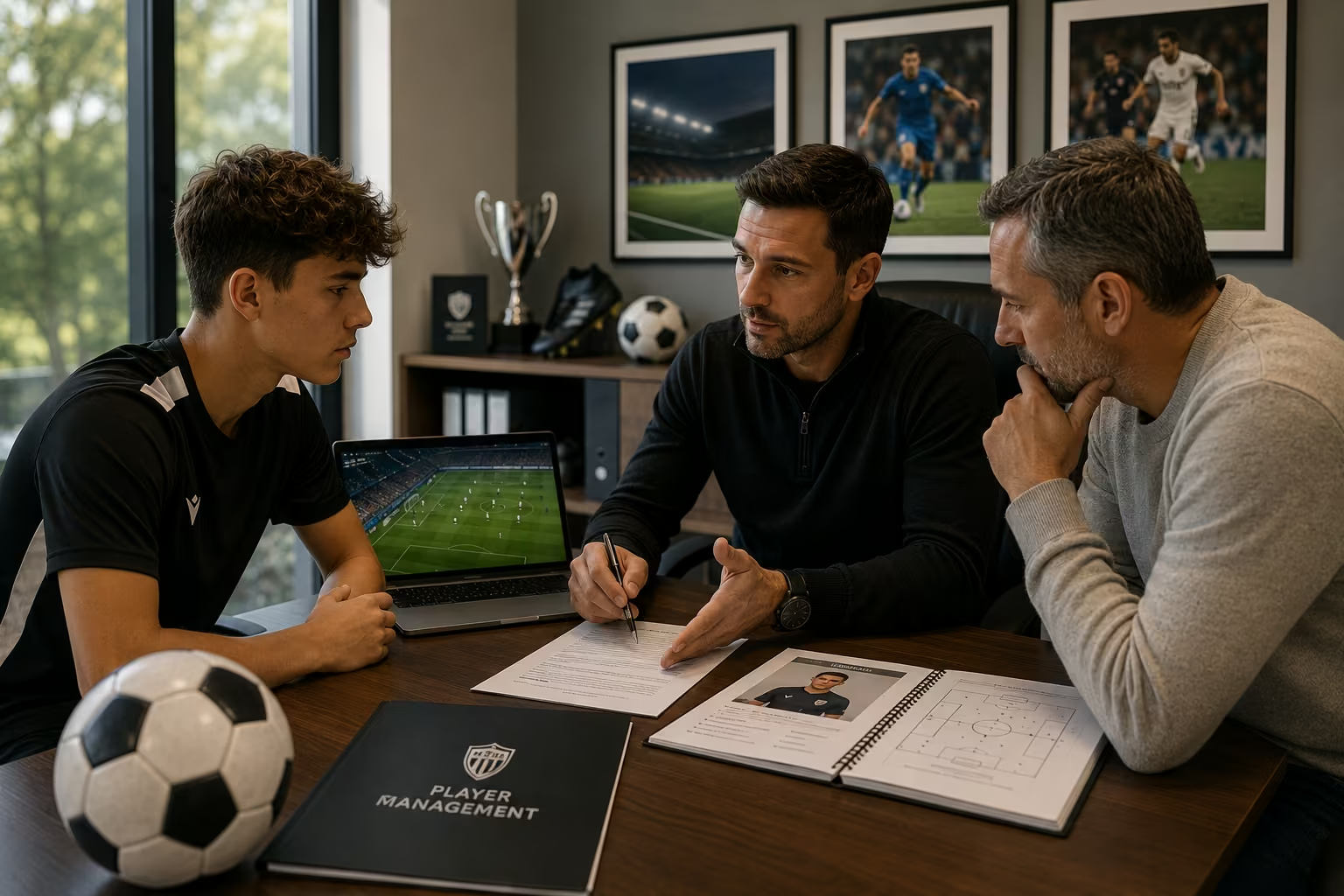
Player management in football is the structured support a player receives when they are ready to pursue serious club opportunities, professional evaluations, contract conversations, or a longer-term career pathway.
For players and parents, this area can be confusing. Some people think player management simply means finding a trial. Others think it only begins after a professional contract is offered. In reality, good player management connects several stages: player assessment, profile development, club identification, trial placement, feedback interpretation, contract process support, and post-signing guidance.
Match Tour 11 supports players through this process by combining football agency work, international club relationships, professional trial access, and pathway planning. The company works across North America and Europe, helping suitable players access professional football environments while keeping expectations realistic.
The key word is suitable. Player management does not guarantee a contract, signing, trial outcome, scouting result, or professional career. It helps the right player pursue the right opportunity at the right time, with clearer support and better football judgment.
What Is Player Management in Football?
Player management in football is the process of supporting a player’s football career decisions, club opportunities, professional evaluations, and contract pathway. It is more advanced than simply attending a camp or sending a highlight video to clubs.
For a developing player, management may begin with honest assessment and pathway advice. For an advanced player, it may involve arranging trials and evaluations inside professional club environments. For a professional-ready player, it may include club identification, placement support, contract process support, and communication after signing.
A football player management relationship should be based on evidence. The player’s current level, match footage, position, age, passport status, physical profile, technical ability, tactical understanding, maturity, and club fit all matter.
This is why player management should not be rushed. A player who is not ready for professional conversations may need training camps, international football tours, stronger competition, or a structured evaluation before management becomes relevant.
How Match Tour 11 Approaches Player Management
Match Tour 11 approaches player management through a football-first pathway model. The company’s work begins by understanding the player, not by promising a club outcome.
The process may include reviewing the player profile, identifying suitable markets, coordinating trials or evaluations, opening club conversations, supporting the contract process when an offer exists, and remaining involved after the player signs.
Match Tour 11 is a FIFA-recognized international football agency and sports tourism brand based in North Vancouver, British Columbia. The company operates across North America and Europe and supports players, teams, academies, clubs, and school football programs through football tours, training camps, player trials, player evaluations, player management, and professional signing support.
For players pursuing Europe, this matters because the pathway requires more than ambition. It requires timing, credibility, preparation, club fit, and real football contacts.
1. Player Management Starts With Honest Assessment
The first stage of player management in football is honest assessment. Before discussing contracts or professional clubs, the player’s current level must be understood.
This assessment may include age, position, current club, playing history, match footage, technical profile, tactical understanding, physical qualities, mentality, passport status, injury history, and availability.
A player may be strong in a domestic environment but not yet ready for Europe. Another player may be ready for a trial but not yet ready for professional management. A third player may already have the level and profile to enter serious club conversations.
Match Tour 11’s role is to identify which stage the player is actually in. This protects players from entering the wrong environment too early and helps families avoid decisions based on hype rather than evidence.
2. The Player Profile Must Be Built Properly
A professional player profile is essential. Clubs and decision-makers need clear information before they consider a trial, evaluation, or signing conversation.
A strong player profile may include full name, date of birth, nationality, passport status, height, position, dominant foot, current club, previous clubs, competitive level, representative experience, references, highlight video, full-match footage, and availability.
Video quality is especially important. A highlight reel can introduce the player, but full-match footage often gives a more accurate view. Clubs want to see decision-making, movement without the ball, defensive responsibility, communication, body language, recovery runs, and consistency.
Match Tour 11 can help players understand whether their profile is ready for club conversations or whether more development, stronger competition, or better footage is needed first.
3. Club Fit Matters More Than Club Name
One of the biggest mistakes players make is chasing the most famous club instead of the most suitable club. In player management, fit is more important than status.
Club fit depends on the player’s position, level, age, physical profile, tactical strengths, passport status, squad needs, budget, market timing, and the club’s style of play.
A technically secure midfielder may fit one market better than another. A physically strong centre-back may need a different environment than a creative winger. A goalkeeper may require a club with a specific positional need. These details affect whether an opportunity is realistic.
Match Tour 11 works across European markets including Spain, Italy, Austria, and England. The goal is not simply to place a player anywhere. The goal is to identify environments where the player can be evaluated properly and where the opportunity makes football sense.
4. Trials and Evaluations Create the First Serious Test
For many players, the first step toward professional opportunity is a structured trial or evaluation. This is where the player enters a professional club environment and is assessed by coaching staff.
Match Tour 11’s player trials and evaluations place suitable players inside professional club environments across Europe for structured two-week trial programs. Players are integrated into daily training settings, evaluated by professional coaching staff, and given honest individual feedback.
Current trial club partners include Sevilla FC, CD Leganes, Malaga CF, Marbella FC, SD Huesca, SK Austria Klagenfurt, Girona FC, FC Marbelli, and Como 1907, depending on player level, timing, position, availability, and fit.
A trial is not a guarantee. It is an evaluation. The club is assessing the player’s technical ability, tactical understanding, physical readiness, mentality, professionalism, and fit within the environment.
5. Feedback Determines the Next Move
After a trial or evaluation, feedback becomes one of the most important parts of the process. Not every trial ends with an offer. Many trials produce development guidance, further monitoring, or a recommendation for a different level.
This feedback should be used properly. If the player needs more physical development, that should become part of the plan. If the player needs more match experience, the next step may be a stronger club environment. If the player needs a different market, the pathway should adjust.
Player management in football is not only about chasing immediate success. It is about interpreting information and making better decisions.
Match Tour 11 helps players and families understand what trial feedback means. A non-signing outcome can still be valuable if it clarifies the player’s current level and next development step.
6. Professional Opportunity Requires Timing and Market Fit
Even when a player performs well, professional opportunity depends on timing and market fit. Clubs make decisions based on squad needs, position depth, budget, registration rules, age profile, passport considerations, and competitive objectives.
A club may like a player but already have depth in that position. Another club may be interested but need to wait for a transfer window. A player may fit the level but not the club’s tactical profile. These factors are part of the reality of football.
This is why player management requires patience and discipline. The process is not always linear. A player may need one trial, several conversations, another development block, or a different market before the right opportunity appears.
Match Tour 11’s management work is designed to help players navigate this reality rather than treat every outcome as success or failure.
7. Contract Support Begins When Real Interest Exists
Contract support becomes relevant when a club shows real interest and there is a genuine offer or professional conversation. This stage requires careful review and clear communication.
Players need to understand more than salary. They should understand the club environment, role expectations, contract term, registration process, accommodation or relocation details, development plan, league level, playing opportunity, and long-term implications.
Match Tour 11’s player management and professional signings service includes supporting the contract process from offer to agreement. The company also remains involved after signing, helping players manage the next stage of the pathway.
This matters because signing a contract is not the end of the process. It is the start of a new professional challenge.
8. Player Management Continues After Signing
Good player management does not stop when a player signs. The post-signing phase can be just as important as the placement itself.
A player may need support adapting to a new club, country, coach, language, training rhythm, playing style, and professional expectations. They may need guidance on communication, performance habits, recovery, professionalism, and future planning.
Early months at a new club can shape the player’s trajectory. A player who adapts well may earn trust quickly. A player who struggles with professionalism, communication, or consistency may lose momentum even if they have talent.
Match Tour 11’s continued involvement after signing helps players understand that professional football requires ongoing management, not just a single opportunity.
9. Long-Term Planning Protects the Player’s Career
Player management in football should always connect to long-term planning. A single trial, offer, or signing should not be viewed in isolation.
Players need to consider where they can develop, where they can play meaningful minutes, what market fits their profile, how the move affects future opportunities, and what the next two to three years could look like.
For some players, the best move may be a lower-profile club with real playing opportunity. For others, a higher-level environment may be useful even if minutes are harder to earn. The right decision depends on the player’s stage and priorities.
Match Tour 11 supports players by helping them think beyond the immediate opportunity. The objective is to build a smarter football pathway, not simply chase the fastest move.
When Does a Player Need Management?
A player may need management when they are ready for professional opportunities, serious club conversations, contract support, or structured placement planning.
Not every young player needs management. Some players need training camps. Others need tours, tournaments, better match footage, more development time, or an individual evaluation before management becomes relevant.
A player may be ready for management if they have a credible playing level, strong match footage, clear position profile, professional habits, maturity, and realistic club interest or trial readiness.
The timing matters. Starting too early can create pressure and confusion. Starting too late can mean missed opportunities. A credible agency helps determine when management is actually appropriate.
How Trials, Camps, Tours, and Management Connect
Player management is one part of a wider football pathway. Match Tour 11 supports multiple stages, depending on the player or team.
For younger players, training camps can build better habits and expose players to professional coaching standards. For teams, international football tours can provide training, matches, professional environments, cultural learning, accommodation, transportation, meals, and full coordination.
For teams needing competitive benchmarks, international tournaments can create stronger match pressure. For individual players who are ready for assessment, player trials and evaluations may be appropriate. For professional-ready players, player management and signing support can become the next stage.
This staged model matters. It prevents players from jumping into the wrong opportunity too early and helps families choose the right step based on evidence.
What Parents Should Understand About Player Management
Parents should understand that player management is not a guarantee of professional football. It is support for players who are ready to pursue serious opportunities.
The best management relationships are realistic. They begin with assessment, use evidence, communicate clearly, and avoid exaggerated promises.
Parents should ask direct questions before entering any management or pathway relationship:
- Is the player ready for management, or would a camp, tour, or trial be more appropriate first?
- What evidence supports the player’s current level?
- Which markets or clubs may fit the player profile?
- What role does video play in the process?
- What happens if a trial does not lead to an offer?
- What support is provided if a contract opportunity appears?
- What support continues after signing?
- What outcomes are realistic?
Families should be cautious with anyone promising guaranteed contracts, guaranteed scouts, guaranteed signings, or guaranteed club selection. Professional football depends on performance, fit, timing, and club needs.
Players Supported by Match Tour 11
Match Tour 11 has supported players through professional pathway work, including Andy Owusu, Sarvin Saini, Predrag Simovic, Reece Curtis, and Matt Verbeek. These examples reflect the company’s involvement in player management and signing support, but every pathway is different.
A player’s route depends on position, level, timing, club interest, market fit, readiness, and performance. No two careers develop in exactly the same way.
This is why Match Tour 11’s player management model is customized. The company assesses the player profile, identifies suitable clubs, facilitates placement where appropriate, supports the contract process, and remains involved after signing.
Useful Football Development and Agency Resources
Players and parents can use credible resources to better understand football development and agency standards. FIFA’s Agents section provides official agent documents and regulatory resources. FIFA also provides a Representation Agreement template and parent education material, including Preparation to engage.
For broader development context, players and parents can review the FIFA Training Centre, UEFA resources on coach development, and the Canada Soccer ecosystem.
These resources do not replace professional guidance, but they help players and families ask better questions before making pathway decisions.
Common Questions About Player Management in Football
Does player management guarantee a professional contract?
No. Player management does not guarantee a contract, signing, club selection, scouting outcome, or trial result. It supports the player through assessment, club conversations, trial pathways, contract process support, and career planning where appropriate.
When should a player look for management?
A player should consider management when they are ready for serious club opportunities, professional evaluations, contract conversations, or structured placement support. Many young players need development opportunities first.
What is the difference between a trial and player management?
A trial is an evaluation opportunity inside a club environment. Player management is broader support that may include club identification, placement strategy, contract process support, and post-signing involvement.
Can Match Tour 11 help players get trials?
Match Tour 11 supports suitable players through structured player trials and evaluations across Europe, depending on player level, readiness, position, timing, and club fit.
What happens after a player signs?
After signing, the player must adapt to the club environment and continue performing. Match Tour 11 remains involved after signing to support the player’s next stage where appropriate.
Final Thoughts on Player Management From Trial to Contract
Player management in football is about more than finding a club. It is a structured process that helps suitable players move from assessment to trial, from trial to feedback, from feedback to opportunity, and from opportunity to contract where the player is ready and the club fit is real.
For players and parents, the most important principle is realism. Professional football is competitive. A good agency does not promise shortcuts. It helps players understand their level, prepare properly, access suitable environments, and make smarter decisions.
Match Tour 11 supports players through this process with professional club relationships, structured trials and evaluations, pathway planning, contract process support, and post-signing involvement for players who are ready for professional opportunities.
To discuss player management, trials, evaluations, or professional signing support, contact Match Tour 11 with the player’s age, position, current club, video, passport status, and football objectives.