Ranked European Football Destinations for Teams, Academies, and School Programs
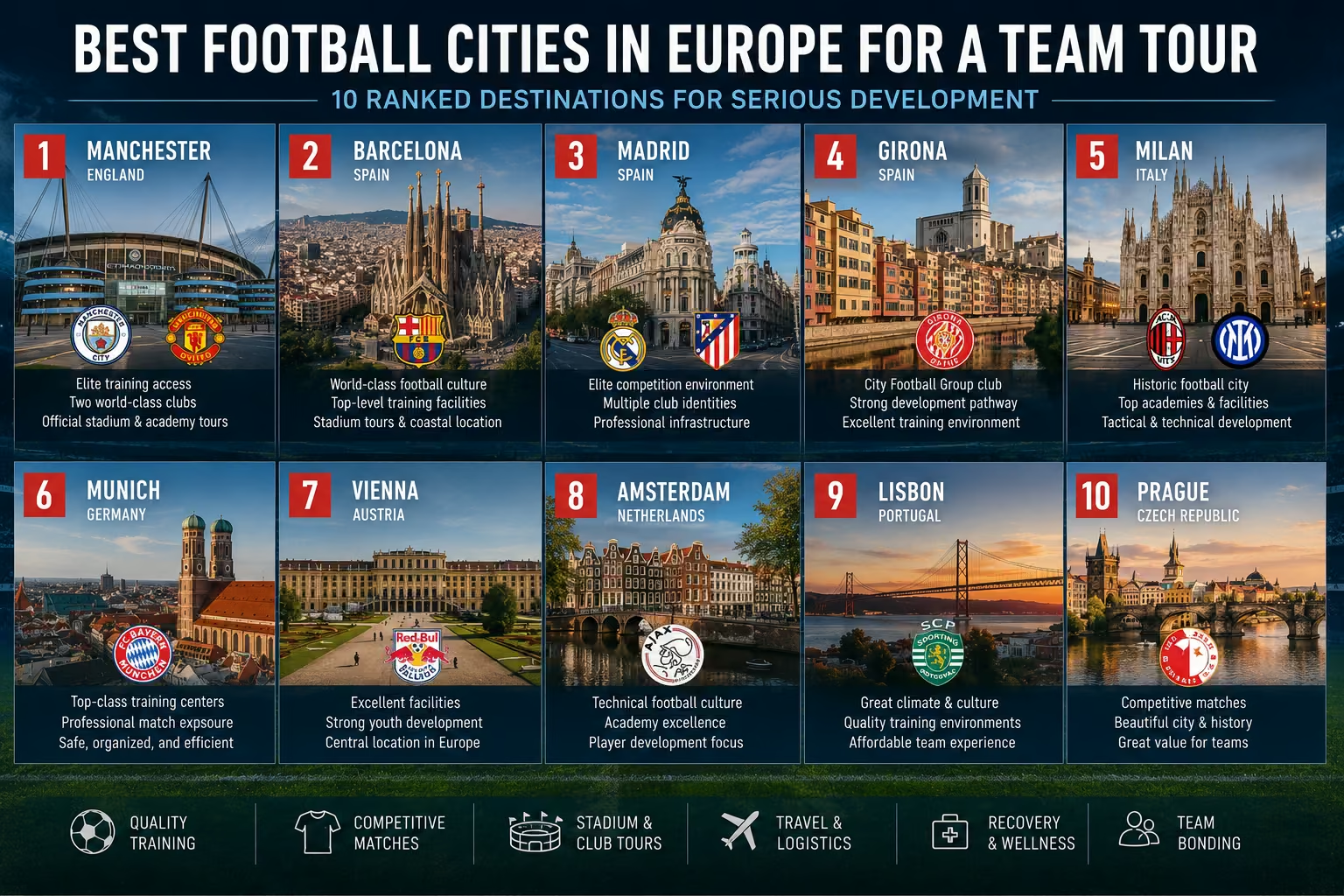
The best football cities in Europe for a team tour are not always the cities with the biggest clubs or most famous stadiums. For a serious team, the right destination should support training, matches, logistics, recovery, education, culture, and player development.
A team tour should not be treated as a sightseeing trip with football added in. The strongest European football tours place players inside environments where they can train, compete, observe professional standards, experience different football cultures, and return home with a clearer understanding of what serious development requires.
For Canadian teams, academies, clubs, and school football programs, Europe offers a wide range of destinations. Madrid, Manchester, Barcelona, Girona, Como, Seville, Marbella, Klagenfurt, London, and Milan can all create value, but they serve different purposes.
This ranking is based on practical team-tour criteria: football culture, training access, competitive match potential, professional club exposure, travel logistics, educational value, recovery balance, and suitability for youth teams. The best destination is not universal. The best destination is the one that matches the team’s age, level, objectives, calendar, and budget.
How to Rank the Best Football Cities in Europe for a Team Tour
Ranking football cities for a team tour requires a different standard than ranking cities for fans. A supporter may choose a destination based on stadium size, match atmosphere, or famous clubs. A team needs more.
Coaches and academy directors should ask whether the city can support high-quality training, suitable opposition, safe accommodation, ground transportation, meal planning, recovery time, cultural education, and a schedule that does not overload players.
A good football city should also offer development variety. Players should be able to see different parts of the game: professional club culture, academy habits, stadium identity, local football passion, competitive matches, and the practical demands of travel.
Match Tour 11 builds European football tours around these principles. The objective is not simply to send teams to famous destinations. The objective is to create football-first itineraries that help players train, compete, learn, recover, and understand the international standard more clearly.
1. Madrid, Spain
Madrid ranks first because it combines elite football identity, strong local competition, multiple club cultures, excellent travel infrastructure, and high development value. For many teams, it is the strongest all-around European football tour destination.
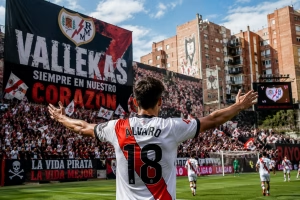
The city gives players access to a wide football spectrum. Real Madrid represents global excellence and elite standards. Atlético Madrid represents intensity, defensive edge, and major-club competitiveness. Rayo Vallecano represents neighbourhood identity, working-class football culture, and the power of a compact stadium environment.
That variety matters. A team can learn more from Madrid than from a single-club city because players can compare different football identities inside one destination. They can see how global prestige, competitive grit, and community football all exist in the same city.
Madrid is also strong for logistics. It is a major European capital with international airport access, accommodation range, training options, cultural experiences, and strong match-day possibilities depending on schedule and availability.
For youth teams and academies, Madrid works especially well when the objective is a complete football experience: training, matches, stadium culture, professional reference points, and Spanish football education.
2. Manchester, England
Manchester ranks second because it is one of the most influential football cities in the world and a strong destination for teams that want to understand English football culture, professional club infrastructure, and modern development standards.
The city offers two globally recognized football references: Manchester City and Manchester United. Manchester City provides a modern football methodology reference, world-class facilities, and City Football Group context. Manchester United provides historic club culture, Old Trafford, and one of the most recognizable football identities in the game.
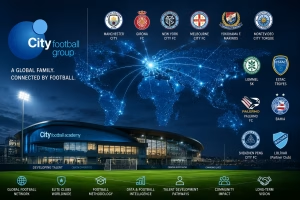
For Canadian teams, Manchester is especially relevant because Match Tour 11 is the exclusive City Football Group partner for Canada. That makes Manchester a practical destination for teams and players interested in CFG-connected football experiences, Manchester City Football School programming, and broader pathway conversations.
Manchester also offers strong educational value. Players can compare modern football infrastructure with historic club identity. They can understand how a city can be shaped by rivalry, academy development, professional expectations, and football culture.
For teams that want a clear view of English football intensity and professional standards, Manchester is one of the strongest destinations in Europe.
3. Barcelona, Spain
Barcelona ranks third because it remains one of Europe’s most important football education cities. The city is closely associated with technical football, positional play, academy identity, and one of the most influential club cultures in modern football.
For young players, Barcelona can be valuable because it encourages them to think about the game differently. The city’s football identity is strongly connected to technical detail, possession concepts, movement, spacing, and decision-making.
Barcelona also gives teams a strong travel experience. The city combines football, culture, architecture, history, and strong international access. For school programs and academy groups, this balance can create both sporting and educational value.
The main planning concern is itinerary discipline. Barcelona can easily become too tourist-heavy if the football purpose is not protected. Coaches should make sure training, matches, recovery, and football education remain central.
For teams that want technical inspiration and a major Spanish football atmosphere, Barcelona is a strong destination. It is especially useful when paired with Girona or another Catalan football environment.
4. Girona, Spain
Girona ranks fourth because it offers a more focused football environment than Barcelona or Madrid while still providing strong European development value. It is especially relevant because Girona FC is part of the City Football Group network.
For Canadian teams, Girona can be a valuable destination because it connects a manageable Spanish city experience with modern football context. The city is not as large or overwhelming as Madrid or Barcelona, which can help teams stay focused.
Girona works well for groups that want training, matches, professional club exposure where available, cultural learning, and a clear connection to contemporary player development. It can also pair well with Barcelona, giving teams both major-city football culture and a more concentrated football environment.
For younger teams, Girona’s scale can be an advantage. Logistics may feel easier, travel fatigue can be lower, and the itinerary can be designed around learning rather than constant movement.
Girona is one of the best destinations for teams that want a football-first Spain experience without relying only on the biggest club names.
5. Milan and Como, Italy
Milan and Como rank fifth as a combined northern Italy option. Milan provides one of Europe’s great football cultures, while Como can offer a more focused football and travel environment. Together, they can create a strong Italian football tour structure.
Milan gives players exposure to major club identity, tactical tradition, stadium culture, and the history of Italian football. The city is associated with AC Milan and Inter Milan, two clubs with major domestic and European significance.
Como provides a different experience. It can work well for teams that want a more controlled environment, scenic recovery value, and football access connected to a distinctive Italian setting. Match Tour 11’s trial and pathway context includes Como 1907, making the area relevant for players and teams interested in Italian football environments.
Italy can be especially useful for tactical learning. Players may be challenged to think more carefully about positioning, defensive responsibility, team shape, and match management.
For teams that want culture, tactical education, and a different football identity from Spain or England, Milan and Como are strong options.
6. Seville, Spain
Seville ranks sixth because it offers passionate Spanish football culture, strong club identity, and a valuable balance between football and education. The city is a strong option for teams that want Spanish football without the scale of Madrid or Barcelona.
Seville is shaped by club rivalry, football emotion, and regional identity. For players, this can be a useful lesson. Football is not only technical and tactical. It is also cultural. Clubs represent cities, neighbourhoods, histories, and supporter communities.
For school programs, Seville can be especially effective because it combines football with rich cultural learning. Teams can train, play matches, experience Spanish city life, and understand how football fits into a broader social environment.
From a development perspective, Seville can challenge players to adapt to climate, travel rhythm, local opposition, and unfamiliar match environments. That adaptation is part of the tour’s value.
Seville is one of the best choices for teams that want a Spanish football tour with strong identity, culture, and manageable logistics.
7. London, England
London ranks seventh because it has an unmatched concentration of professional clubs, stadiums, football history, and match-day possibilities. However, it ranks below Manchester for many team tours because logistics can be more demanding.
London gives teams access to multiple football identities in one city. Arsenal, Chelsea, Tottenham Hotspur, West Ham United, Fulham, Crystal Palace, Brentford, and other clubs all represent different sides of the city’s football ecosystem.
For players, London can be educational because it shows how one city can contain different club cultures, fan bases, facilities, and competitive histories. It is also a strong destination for watching professional football, depending on match availability.
The challenge is planning. London is expensive, large, busy, and logistically complex. Transportation times, accommodation location, training access, and recovery windows must be managed carefully.
London is best for mature groups, older academy teams, or school programs that can handle a dense city schedule. It can be outstanding when planned well, but it is less forgiving than more compact football destinations.
8. Marbella, Spain
Marbella ranks eighth because it is less of a traditional football city and more of a high-value training and team-camp destination. For the right team, that can be exactly the point.
Marbella can work well for teams that want strong training conditions, recovery balance, team bonding, and a controlled environment. It is especially useful for preseason-style tours, academy development blocks, or groups that need a focused schedule rather than a heavy stadium-and-city itinerary.
For players, Marbella can teach the importance of daily habits. A well-planned camp can focus on training quality, recovery, nutrition, team meetings, tactical work, and match preparation.
Marbella may not offer the same iconic football atmosphere as Madrid, Manchester, or Barcelona, but it can offer something those cities sometimes struggle to provide: calm, focus, and controlled team rhythm.
For coaches who prioritize training over tourism, Marbella can be one of the most practical destinations in Europe.
9. Munich, Germany
Munich ranks ninth because it offers elite football standards, major-club infrastructure, and strong German football culture. It can be a valuable benchmark destination for teams studying professionalism, facilities, and performance environments.
Bayern Munich gives the city a clear elite football reference. The club’s standards, history, and infrastructure make Munich one of Europe’s most recognizable football cities.
Germany can also offer a useful football education for teams. Players may see strong organization, structured development, match-day culture, and a different tactical and physical rhythm from Spain or England.
Munich’s ranking is slightly lower because it may be less central to Match Tour 11’s current destination model than Spain, England, Italy, and Austria. However, as a football city, it remains a strong benchmark.
Munich is best for teams that want to study elite club standards and German football organization rather than build a Spain-style technical tour or England-style culture tour.
10. Klagenfurt, Austria
Klagenfurt ranks tenth because it is not a global football capital, but it can be a highly useful team-tour destination for focused development. For some teams, a smaller football environment can be more valuable than a famous city.
Austria offers a Central European football setting where players can experience different training habits, physical demands, tactical structure, and competitive environments. Klagenfurt can support teams that want a camp-style experience with strong focus and manageable logistics.
Match Tour 11’s trial and pathway context includes SK Austria Klagenfurt, making the city relevant for players and teams interested in Austrian football environments.
Klagenfurt may not provide the same stadium tourism appeal as Madrid, Manchester, or Barcelona. Its value is different. It can help players focus on training, adaptation, competition, recovery, and the realities of a smaller European football market.
For teams that want a serious development environment without the distractions of a major city, Klagenfurt deserves consideration.
Quick Ranking Summary
- Madrid — best all-around football tour city for culture, clubs, matches, and logistics.
- Manchester — strongest English football city for professional standards and CFG relevance.
- Barcelona — best for technical inspiration, culture, and Spanish football identity.
- Girona — best focused Spain destination with City Football Group context.
- Milan and Como — best Italian combination for tactics, culture, and pathway relevance.
- Seville — best for Spanish football emotion, culture, and educational balance.
- London — best for club variety, but logistically demanding.
- Marbella — best for focused training, recovery, and team-camp rhythm.
- Munich — best benchmark for German elite standards and organization.
- Klagenfurt — best smaller Central European option for focused development.
How Coaches Should Choose the Right City
Coaches should choose a city based on the team’s development objective, not only reputation.
If the team needs a complete football and culture experience, Madrid is difficult to beat. If the goal is English football culture and modern professional infrastructure, Manchester is the strongest option. If the team needs technical inspiration, Barcelona and Girona work well. If the goal is tactical education, Italy can be valuable. If the team needs focus and recovery, Marbella or Klagenfurt may be more useful than a major capital.
The age group also matters. Younger teams usually benefit from simpler logistics, balanced schedules, and controlled environments. Older academy teams may need stronger opposition, more intense training, and greater exposure to professional standards.
Teams should also consider the time of year. Weather, school calendars, league seasons, tournament availability, professional match schedules, and facility access can all affect the final itinerary.
What Makes a Football City Good for Player Development?
A good football city creates useful learning. It should expose players to different standards, different opponents, and different ways of thinking about the game.
Strong development cities usually offer:
- Access to quality training environments.
- Suitable competitive match opportunities.
- Professional club culture or academy references.
- Reliable accommodation and transportation options.
- Recovery-friendly scheduling possibilities.
- Educational cultural experiences.
- Stadium or match-day exposure where available.
- A football identity that players can understand and learn from.
The city should support the football objective. If the itinerary becomes too crowded or too tourist-focused, players may return tired rather than developed.
How Match Tour 11 Builds European Team Tours
Match Tour 11 organizes international football tours for teams, academies, clubs, and school football programs across Europe. The company’s tours may include professional training environments, competitive matches, stadium experiences, live professional football where available, cultural activities, accommodation, meals, ground transportation, and full tour coordination.
The company’s current European destination context includes cities and regions such as Madrid, Manchester, Girona, Como, Marbella, Seville, Barcelona, and Klagenfurt. These destinations give teams different football options depending on objectives.
Match Tour 11 is also the exclusive City Football Group partner for Canada, which is relevant for teams considering Manchester, Girona, Manchester City Football School programming, and CFG-connected development experiences.
The company’s role is not only to organize travel. It is to help teams choose the right football environment, build a balanced itinerary, coordinate logistics, and connect the experience to player development.
Questions Teams Should Ask Before Choosing a Destination
Before selecting a city, teams should ask practical questions:
- What is the main purpose of the tour?
- Does the team need development, competition, culture, exposure, preseason preparation, or team bonding?
- Which destination best fits the team’s age and level?
- How many training sessions and matches are realistic?
- How much recovery time will players need?
- Can the destination support safe accommodation and efficient transportation?
- Are stadium experiences or live matches available during the travel window?
- Does the city provide football lessons the players cannot easily get at home?
These questions help teams avoid choosing a destination only because it sounds impressive. The best city is the one that supports the team’s actual development needs.
Useful Football Travel and Development Resources
Teams planning European football travel can review official club and development resources to better understand destination value. Manchester City provides information on its stadium and academy tour, Manchester United provides Old Trafford visit information, FC Barcelona provides Barça stadium and museum experience information, and City Football Group provides background on Girona FC within its club network.
For broader development context, the FIFA Training Centre provides player and coach development resources. UEFA also offers information on coach development, coaching courses, and grassroots football programmes. Canadian teams can also review the Canada Soccer ecosystem to understand the domestic development structure before planning international exposure.
Common Questions About the Best Football Cities in Europe for a Team Tour
What is the best football city in Europe for a youth team tour?
Madrid is the strongest all-around choice because it offers elite clubs, local football culture, strong logistics, multiple stadium identities, and good development value. Manchester is also excellent, especially for teams interested in English football and City Football Group context.
Is Barcelona better than Madrid for a football tour?
Barcelona is excellent for technical inspiration and football culture, while Madrid offers broader club variety and stronger all-around tour flexibility. The better choice depends on the team’s objectives.
Should a team choose a famous city or a focused training destination?
It depends on the goal. Famous cities can provide stadium culture and professional inspiration. Focused destinations such as Marbella, Girona, Como, or Klagenfurt can offer better rhythm, recovery, and training concentration.
Can Canadian teams access City Football Group-related destinations?
Yes. Through Match Tour 11’s exclusive City Football Group partnership for Canada, Canadian teams can explore CFG-connected development opportunities where appropriate, including Manchester and Girona-related football experiences depending on timing, availability, and team fit.
What should be included in a European football team tour?
A strong tour should include suitable training, competitive matches, accommodation, meals, transportation, recovery time, cultural education, stadium or match-day exposure where available, and clear communication before and during the trip.
Final Thoughts on Choosing the Right Football City
The best football cities in Europe for a team tour are not chosen by reputation alone. They are chosen by fit. Madrid, Manchester, Barcelona, Girona, Milan, Como, Seville, London, Marbella, Munich, and Klagenfurt can all create value, but they do not create the same kind of value.
A serious team tour should help players grow. That growth may come from training intensity, new opponents, stadium culture, professional club exposure, tactical learning, travel maturity, or team bonding.
For coaches and academy directors, the correct question is not “Which city sounds biggest?” The correct question is “Which city gives our players the right football problem to solve?”
Match Tour 11 helps teams answer that question through development-focused European football tours built around training, matches, logistics, culture, and pathway context.
To plan a European football team tour, contact Match Tour 11 with the team’s age group, level, preferred travel window, destination interests, and football objectives.