Football Travel Built Around Player Development
An International football tour is more than a team trip overseas. For coaches, academies, clubs, and player development programs, it can become a structured football experience that combines elite training, competitive matches, professional exposure, cultural education, and long-term player growth.
When planned correctly, an international football tour gives players access to football environments they may not experience at home. They train in new systems, compete against unfamiliar opponents, learn from different coaching methods, visit professional clubs, and experience football culture in countries where the game is part of everyday life.
For coaches and academy directors, the value is not only in the destination. The real value comes from structure. A strong football tour should be designed around player development outcomes, appropriate competition, safe logistics, professional organization, and clear communication with families and staff.
This guide explains what an international football tour is, what it should include, and how coaches and academies can evaluate whether a tour provider is capable of delivering a serious football experience rather than a generic sports vacation.
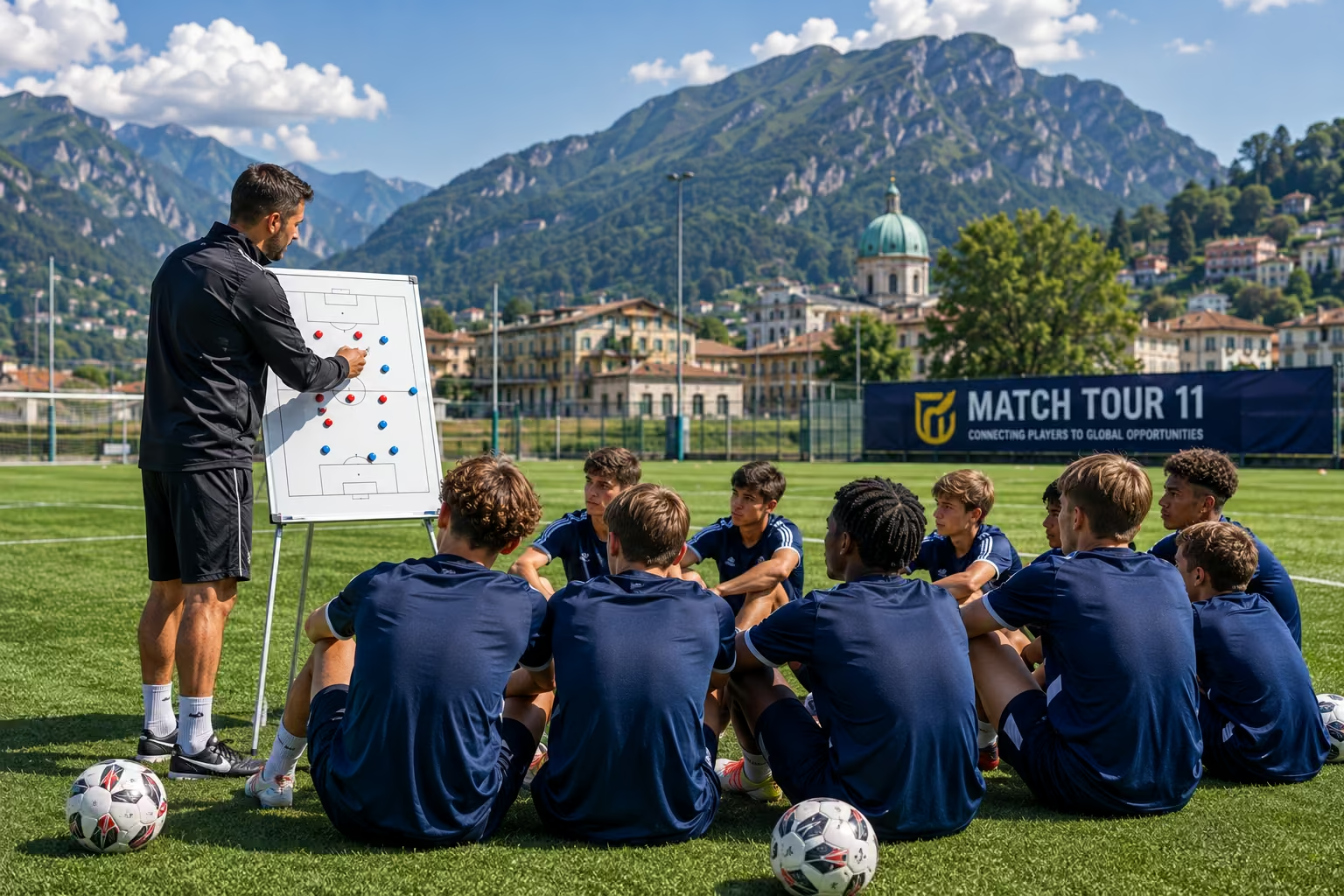
For coaches and academies, an international football tour should combine structured training, appropriate competition, reliable travel planning, cultural football experiences, and a clear development purpose.
What Is an International Football Tour?
An international football tour is a planned overseas football experience where players, teams, academies, or clubs travel to another country for training, matches, tournaments, professional club visits, cultural activities, and player development opportunities.
For North American players and academies, many international tours focus on Europe because of the continent’s professional club structure, academy systems, competition standards, and football culture. A tour may include training camps in Spain, England, Portugal, Italy, Germany, France, the Netherlands, or another football destination depending on the group’s level, age, goals, and schedule.
A well-designed international football tour is not simply a list of games and sightseeing stops. It should have a football purpose. That purpose may be technical development, tactical education, team bonding, preseason preparation, tournament participation, professional environment exposure, or evaluating a player’s readiness for higher levels.
For example, a youth academy may use a European football tour to expose U15 or U17 players to faster decision-making and different tactical styles. A college-preparation group may use the tour to improve player maturity and create match footage from international competition. An elite player group may need professional-style training sessions, academy-level opposition, and trial-style evaluation opportunities.
Who Should Consider an International Football Tour?
An international football tour can be useful for different football groups, but the structure should match the needs of the participants. A generic package rarely works well for every team.
Coaches and academy directors often consider international tours for several types of groups:
- Youth football academies that want to expose players to European training and competition.
- Club teams preparing for a new season or seeking a high-value development experience.
- High school or college-bound players who need broader football education.
- Elite player groups looking for professional-style training environments.
- Coaches who want to observe European methodology and bring new ideas back to their programs.
- Families and player representatives exploring international football pathways.
The best tours are built around player level, age group, maturity, travel readiness, and football objectives. A U12 team should not have the same itinerary as a U19 elite showcase group. A recreational club should not be placed into an overly demanding competitive environment that could damage confidence or create unnecessary physical strain.
What Should an International Football Tour Include?
A complete international football tour should include more than flights and hotel rooms. At minimum, it should combine football programming, travel logistics, player welfare planning, communication, cultural experiences, and on-the-ground support.
For coaches and academies, the key question is simple: does the tour provider understand both football and travel operations? A provider may be good at tourism but weak in football planning. Another may know football but lack the logistical systems required to move a team safely across countries. The strongest tours require both.
A strong tour should include clear football objectives, qualified coaching, appropriate matches, professional club access where available, accommodation planning, meals, transportation, supervision, communication, and post-tour follow-up.
When comparing providers, coaches should look beyond itinerary length and focus on football value. Match Tour 11 builds international football tours around training quality, match relevance, player development goals, and reliable on-the-ground coordination.
Step 1: Define the Football Objective Before Choosing a Destination
Every international football tour should begin with a defined football objective. Without this, the itinerary can become unfocused and difficult to evaluate.
Common objectives include player development, tournament competition, team bonding, professional exposure, academy education, preseason preparation, or trial opportunities. The objective affects every major planning decision, including destination, match level, training schedule, accommodation location, transportation, recovery time, and staffing.
For example, a team traveling for tournament experience needs a schedule built around rest, warm-up sessions, match preparation, and recovery. A team traveling for training camp development may need more technical sessions, coach education, video review, and controlled friendly matches.
Coaches should avoid choosing a destination only because it sounds attractive. Spain, England, Italy, Portugal, and Germany can all offer valuable football experiences, but the right destination depends on what the team needs to achieve.
Step 2: Build the Tour Around Professional Training Sessions
Training is one of the most important parts of an international football tour. Strong programs should include sessions led by qualified coaches who understand the local football environment and the visiting team’s level.
Training may focus on tactical principles, position-specific details, technical speed, pressing, build-up play, transition moments, finishing, defensive organization, or game intelligence. For academy players, exposure to different coaching language and methodology can be a major developmental benefit.
Coaches should ask who leads the sessions, where training takes place, how many sessions are included, what the session objectives are, and whether training is adapted to the age and level of the group.
An international football tour should not treat training as filler between sightseeing activities. Training should connect to the larger football objective. If the group is preparing for matches, training should support tactical preparation. If the group is focused on development, training should challenge habits, decision-making, and technical quality.
Step 3: Arrange Competitive Matches at the Right Level
International matches are often the most memorable part of a football tour. They are also one of the most important development tools when arranged correctly.
A good provider should organize matches against appropriate opponents. The goal is not always to win comfortably. The goal is to create meaningful competitive pressure that challenges players while still keeping the match productive.
Opponent selection should consider age, level, physical profile, tactical standard, and match purpose. A U16 academy team from North America may benefit from playing a European academy side, a regional club, or a tournament opponent depending on the tour objective.
Some tours include friendly matches. Others include international tournaments. Both formats can be valuable.
- Friendly matches allow more control over opponent level, timing, substitutions, and development focus.
- Tournaments create competitive pressure, group-stage formats, varied opposition, and a stronger event atmosphere.
- Showcase matches may be useful for older players seeking evaluation or exposure.
Coaches should avoid tours that promise vague “elite matches” without explaining the opponent profile. The match schedule should be realistic and balanced. Too many matches in a short period can reduce performance quality and increase fatigue.
Some academies use international tournaments as the competitive anchor of the tour, while others prefer friendly matches, training camps, or a blended schedule that balances development and performance.
Step 4: Include Professional Club Access and Academy Exposure
One major reason teams choose an international football tour is access to professional football environments. This may include club facility visits, academy presentations, professional match attendance, training observation, guest coaching, or behind-the-scenes education.
For young players, seeing how professional academies operate can be powerful. They can observe standards in punctuality, preparation, technical execution, recovery, nutrition, tactical detail, and player behavior. This helps players understand that development is not only about talent. It is also about habits.
However, coaches should be careful with unrealistic claims. Not every tour can guarantee professional trials, scout attendance, or club placement. Serious providers should be clear about what is included, what is possible, and what depends on player level, availability, timing, and club interest.
For programs seeking higher-level opportunities, Match Tour 11 can structure football experiences around appropriate exposure, training environments, and player pathway support where relevant. The process should remain honest: trials and evaluations must be earned through ability, preparation, and the right fit.
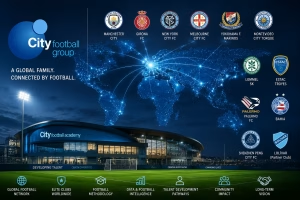
Teams interested in official camp experiences can also explore Match Tour 11’s City Partnership information to understand how professional methodology can be introduced into a structured player development environment.
Step 5: Plan Travel Logistics Like a Professional Program
Football quality matters, but logistics determine whether the tour runs smoothly. International team travel requires clear systems, especially when minors, families, staff, equipment, and match schedules are involved.
Before confirming an international football tour, coaches and academy leaders should review the practical details carefully.
- Airport arrival and departure coordination.
- Ground transportation for players, staff, luggage, and equipment.
- Hotel quality, location, rooming structure, and meal access.
- Training field location and transfer times.
- Match-day transportation and timing.
- Emergency contact procedures.
- Medical support planning.
- Travel insurance expectations.
- Parent communication process.
- Daily itinerary management.
A well-run tour should reduce uncertainty for coaches. Staff should not be left to solve transportation, meals, facility access, or schedule changes alone in a foreign country. On-the-ground support is essential.
Step 6: Prioritize Accommodation, Meals, Recovery, and Welfare
Accommodation should support performance, safety, and supervision. A hotel that looks attractive online may not be practical if it is far from training fields, difficult for bus access, or unsuitable for team meals.
For academy groups, rooming plans should be clear. Coaches need to know whether players are sharing rooms, how staff rooms are positioned, how curfews are managed, and whether families are staying in the same property or separately.
Meals are also a performance issue. Players traveling internationally may deal with time-zone adjustment, unfamiliar food, hydration changes, and heavy activity schedules. Tours should account for breakfast, team meals, pre-match nutrition, post-match recovery, and access to water.
Recovery time should be built into the itinerary. A tour that fills every hour with activities can look impressive on paper, but players need rest to train and compete properly. Coaches should look for a schedule that balances football, education, sightseeing, and downtime.
Player welfare should be central to every international football tour, especially for youth teams. Coaches and academy directors should evaluate how the provider handles supervision, communication, emergency response, and travel risk.
Important welfare questions include:
- Who is the local point of contact during the tour?
- What happens if a player is injured?
- How are medical facilities identified?
- How are allergies and dietary needs handled?
- What is the communication process with parents?
- How are schedule changes communicated?
- Are players supervised during cultural activities?
For any serious academy, safety planning should not be treated as an afterthought. It is part of professional tour delivery.
Step 7: Add Cultural Football Immersion and Coach Education
An international football tour should help players understand football culture beyond the field. This can include attending a professional match, visiting stadiums, touring historic clubs, exploring local neighborhoods, learning about supporter culture, and seeing how the sport shapes communities.
Cultural experiences are not distractions when planned properly. They help players become more mature, adaptable, and aware. A player who understands different football cultures may develop a broader view of the game and their own development pathway.
For coaches, cultural immersion can also strengthen team identity. Shared travel experiences often create trust, resilience, and memories that carry back into the season.
International football tours are not only for players. Coaches can gain significant value by observing different training methods, match preparation routines, academy structures, and communication styles.
A strong tour may include coach workshops, tactical discussions, academy presentations, or opportunities to observe local coaches in session. This can help coaches bring new ideas into their own club environment.
Coaches can also use external education resources such as the FIFA Training Centre and UEFA grassroots football resources to support their planning before and after the tour.
What Is the Difference Between a Football Tour, Camp, Tournament, and Trial?
Coaches often use these terms together, but they are not the same. Understanding the difference helps academies choose the right program.
A football tour is the broader travel experience. It may include training, matches, sightseeing, education, and cultural activities. A football camp is usually a concentrated training program led by coaches at a specific facility. A tournament is a structured competition against multiple teams. A trial is an evaluation opportunity where a player is assessed by a club, academy, or professional environment.
A strong international football tour may include all four elements, but not every tour should. Younger teams may benefit more from training and cultural learning. Older elite players may need higher-level matches and evaluation opportunities. Coaches should match the format to the development stage of their players.
How Long Should an International Football Tour Be?
Most international football tours last between one and two weeks, although the right length depends on the destination, budget, player age, and football goals.
A shorter tour may work well for a team attending a tournament or combining a few training sessions with cultural activities. A longer tour may be better for teams seeking deeper development, multiple matches, professional club exposure, or more than one destination.
Coaches should be realistic about travel fatigue. The first day after arrival is not always the best time for a demanding match. Players may need a light activation session, hydration, food, and sleep before performing at a high level.
A balanced itinerary may include arrival, recovery, training, friendly matches, tournament play, professional match attendance, cultural activities, and departure without overloading players.
Sample International Football Tour Structure
Every tour should be customized, but coaches often benefit from seeing what a practical structure can look like.
A seven- to ten-day European football tour might include:
- Arrival, airport pickup, hotel check-in, team orientation, and light recovery.
- Training session with local coaching staff and tactical preparation.
- Friendly match against a local club or academy opponent.
- Professional club facility visit, stadium tour, or academy education session.
- Second training session focused on tactical corrections from the match.
- International tournament participation or additional friendly match.
- Professional match attendance or cultural football experience.
- Recovery, team activity, and final development session.
- Final match, evaluation, or closing team meeting.
- Departure and post-tour follow-up.
This type of structure gives players enough variety without turning the trip into a rushed checklist. The best itinerary is not always the busiest one. It is the one that best supports the team’s objective.
How Coaches and Academies Should Evaluate a Tour Provider
Choosing the right provider is one of the most important decisions in the planning process. Coaches should look for experience, football credibility, transparent communication, and the ability to customize the tour.
Important evaluation criteria include:
- Football background of the organizers.
- Experience working with international teams.
- Quality of training environments and coaching contacts.
- Ability to arrange appropriate matches.
- Transparency around what is included and excluded.
- Clear pricing structure.
- Local support in the destination country.
- Understanding of player development, not just travel logistics.
- Professional communication with coaches and families.
- Ability to customize the experience by age, level, and objective.
Match Tour 11 is built around this type of football-first approach. Run by former professional players, the brand connects North American and global players with European training camps, tournaments, professional environments, and player pathway opportunities through customized end-to-end experiences.
That background matters. Coaches and families are not only buying travel. They are trusting a provider to understand the football pathway, the development environment, and the operational details that make an international experience valuable.
Questions to Ask Before Booking a Football Tour
Before committing, coaches and academy directors should ask detailed questions. A professional provider should welcome these questions and answer them clearly.
- What is the main football objective of this tour?
- Which country and city best fit our team’s goals?
- Who will lead the training sessions?
- What level of opponents will we play?
- Are matches confirmed or proposed?
- Will our players attend a professional match or visit a club facility?
- What is included in the package price?
- What is not included?
- How are transportation, meals, and accommodation handled?
- Who provides local support during the trip?
- What happens if the schedule changes?
- How are injuries, emergencies, or travel issues managed?
- Can the itinerary be customized for our age group and level?
These questions help separate serious football tour planning from generic travel packaging. The clearer the answers, the easier it is for coaches to communicate value to players and families.
Common Mistakes to Avoid When Planning an International Football Tour
Even strong academies can make planning mistakes if they focus only on destination and price. A successful tour requires more detailed thinking.
Choosing a Tour Based Only on Cost
Budget matters, but the cheapest option may not provide the right football environment, match quality, safety planning, or local support. Coaches should compare value, not just price.
Overloading the Schedule
Too many matches, activities, and transfers can reduce the quality of the experience. Players need time to recover, process information, and enjoy the environment.
Ignoring Player Level
Opponent selection must be appropriate. A mismatch can create frustration, injury risk, or limited development value. Strong tours match competition to the team’s profile.
Accepting Vague Trial Promises
Professional trial opportunities should be communicated responsibly. Not every player is ready for a trial, and no provider should guarantee outcomes that depend on club decisions and player performance.
Leaving Parents Without Clear Information
Families need clear communication about itinerary, cost, safety, supervision, documents, deadlines, and expectations. Poor communication can create unnecessary stress before departure.
How an International Football Tour Supports Player Development
An international football tour can accelerate development because it places players in unfamiliar environments. They must adapt to new coaching styles, different opponents, travel routines, cultural expectations, and competitive standards.
This can improve more than technical ability. Players often develop independence, maturity, communication skills, resilience, and a better understanding of what high-performance football demands.
For serious players, the experience can also clarify motivation. Some players return home with a stronger commitment to training. Others gain a more realistic view of the gap between local competition and international standards. Both outcomes are useful.
For coaches, the tour provides a unique assessment environment. Staff can observe how players handle travel, pressure, fatigue, tactical changes, unfamiliar opponents, and team responsibilities away from home.
For Canadian teams and academies, resources such as the Canada Soccer Ecosystem can also help frame development conversations around age, stage, and long-term player growth.
Why European Football Tours Are Popular for North American Teams
European football tours are popular because they offer access to established football cultures, professional club structures, competitive youth environments, and diverse tactical styles. For North American players, this contrast can be especially valuable.
Players may experience faster ball movement, more compact defending, different refereeing styles, stronger tactical discipline, and more intense football culture. These differences help players understand the global game more clearly.
Europe also provides a wide range of tour formats. A group may train in Portugal, compete in Spain, visit professional clubs in England, attend matches in Italy, or experience academy environments in the Netherlands or Germany. The right destination depends on goals, age group, budget, season, and availability.
What Documents and Preparation Do Teams Need?
Coaches and managers should begin administrative preparation early. International travel requires more coordination than a domestic tournament.
A practical preparation checklist may include:
- Valid passports for all travelers.
- Visa or entry requirement review where applicable.
- Parent or guardian travel consent forms for minors.
- Medical information and allergy details.
- Travel insurance review.
- Emergency contact list.
- Player rooming list.
- Team equipment list.
- Training kit and match kit plan.
- Code of conduct for players and families.
- Payment schedule and cancellation terms.
- Final itinerary shared with staff and families.
Good preparation allows coaches to focus on football instead of solving avoidable problems during the trip.
How to Make the Tour Valuable After the Team Returns Home
The value of an international football tour should continue after the flight home. Coaches can extend the impact through post-tour review and follow-up.
Useful post-tour actions include holding a team reflection meeting, reviewing match footage, identifying tactical lessons, asking players to set new development goals, and sharing observations with parents. Coaches may also use the experience to refine training plans for the next season.
For older players, post-tour follow-up may include evaluation feedback, highlight video review, discussion of future opportunities, or planning the next stage of their football pathway.
This is where a football-first provider can add value. A tour should not feel like a one-time transaction. It should support a broader development journey.
Is an International Football Tour Worth It?
An international football tour is worth it when the experience is properly planned, age-appropriate, professionally managed, and connected to clear football goals.
For academies, the tour can strengthen player development, team culture, coaching education, and program reputation. For players, it can provide motivation, exposure, confidence, and a more complete understanding of the global game. For families, it can be a meaningful investment when the itinerary is transparent and the football value is clear.
The key is choosing the right structure. A strong tour should include quality training, suitable competition, reliable logistics, safe supervision, cultural football experiences, and honest communication about opportunities.
Plan a Successful International Football Tour With Match Tour 11
A successful international football tour starts with a clear objective: player development, team bonding, tournament competition, professional exposure, or a complete European football experience.
Match Tour 11 helps coaches, academies, and player groups create customized football tours that connect serious players with European training camps, competitive matches, professional environments, and cultural football experiences.
Because the brand is run by former professional players, the planning process is grounded in football realities rather than generic travel packaging. The goal is to build tours that match the level, age, ambition, and needs of each group.
If your team is planning its next overseas football experience, contact Match Tour 11 to discuss the right destination, schedule, and development structure for your players.