How Competing Abroad Builds Better Football Habits
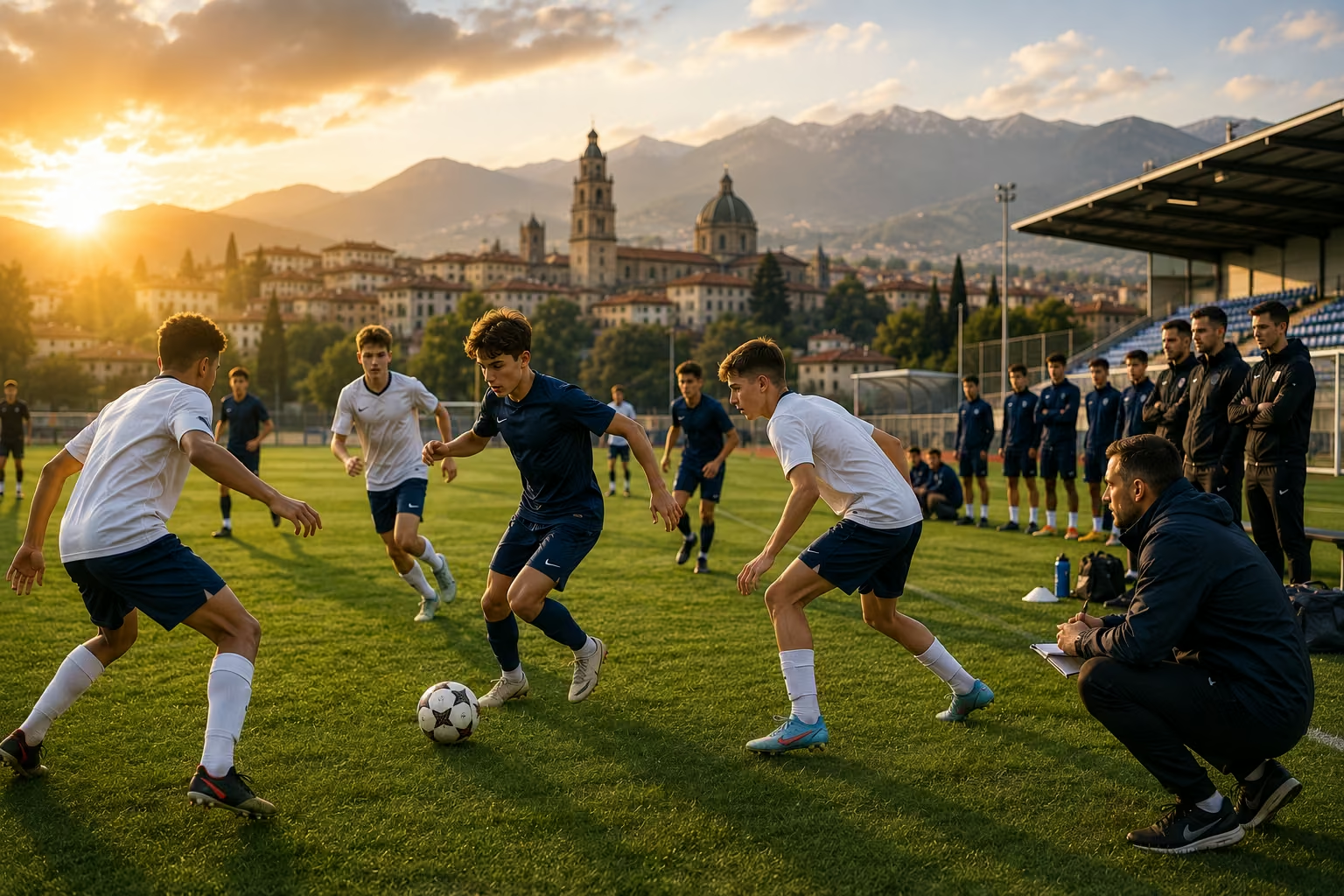
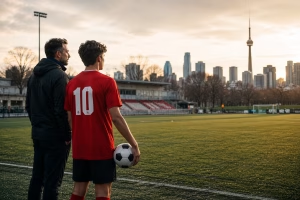
Player development through international football is not only about taking a team overseas. The real value comes from placing players in unfamiliar football environments where they must adapt, compete, communicate, recover, and learn under new conditions.
For coaches, academy directors, school football programs, club managers, parents, and players, international football can become a serious development tool when it is planned with purpose. The trip should not be treated as a vacation with a few matches attached. It should be designed around football learning, team standards, player maturity, and a clear connection to the player’s long-term pathway.
Match Tour 11 builds international football experiences across North America and Europe for players, teams, academies, clubs, and school football programs. These experiences may include professional training environments, competitive matches, international tournaments, training camps, player trials, player evaluations, and player management support.
The objective is realistic. International football does not guarantee a professional contract, scouting outcome, club selection, or future trial. What it can do is expose players to higher standards, different styles, and new development pressures that help them understand what growth actually requires.
Why International Football Changes the Development Environment
Most players develop inside familiar routines. They train with the same coaches, compete against known opponents, play on familiar fields, and understand the rhythm of their domestic league or academy schedule. Familiarity can help players build confidence, but it can also hide weaknesses.
International football changes that environment. Players may face opponents who press differently, combine faster, defend more compactly, or punish mistakes more quickly. They may train under coaches who use different language, demand different details, or structure sessions around unfamiliar tactical ideas.
This is where player development through international football becomes valuable. A player is not only judged by what they can do when everything is comfortable. They are tested by how quickly they can adapt when the environment changes.
A technically strong player may realize they need to scan earlier. A fast attacker may discover that speed alone is not enough against organized defenders. A confident midfielder may learn that decision-making under pressure matters more than simply asking for the ball. A defender may understand that positioning, communication, and concentration are just as important as physical strength.
These lessons are difficult to replicate in a normal weekly schedule. International football compresses them into a concentrated experience that can change how players see the game.
1. Players Learn to Adapt to Different Styles of Play
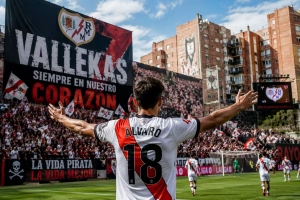
One of the strongest benefits of international football is exposure to different styles of play. A team from Canada or North America may be comfortable with its local competition, but an opponent in Spain, England, Italy, Austria, or another European environment can present different problems.
Spain may challenge players with technical speed, positional awareness, passing angles, and decision-making in tight spaces. England may expose players to tempo, intensity, physical competition, and football culture. Italy may challenge players tactically, especially in defensive organization and match control. Austria may test athletic output, discipline, transitions, and Central European training standards.
Players grow when they are forced to solve new football problems. A winger who usually beats players with pace may need to improve timing and combination play. A midfielder who usually has time on the ball may need to play quicker. A centre-back who is used to direct play may need to build under pressure and defend in larger spaces.
This is why international football should not be measured only by wins and losses. The developmental question is more important: what did the players have to solve, and how did they respond?
2. Players Build Better Technical Habits Under Pressure
Technical development changes when the speed of the environment increases. A player may look clean in isolated drills but struggle when they must receive, scan, turn, pass, and move under pressure from unfamiliar opponents.
International matches can expose those details quickly. First touch becomes more important. Passing weight matters. Body shape matters. Receiving across the body matters. Players must decide earlier because the opponent may close space faster than expected.
Player development through international football often starts with these small technical details. A player may return home with a clearer understanding of why their coach constantly emphasizes scanning, tempo, passing angles, and support movement.
Training abroad can also reinforce these habits. Professional or high-quality club environments often demand clean repetition, better concentration, and sharper execution. Players learn that technical quality is not only about talent. It is about repeatable habits under real pressure.
3. Tactical Awareness Improves When Players Face New Problems
Tactical development requires exposure to different game situations. Players need to understand how to adjust when the opponent presses high, drops deep, overloads midfield, plays direct, builds patiently, or changes tempo during the match.
International football gives players these reference points. A Canadian academy team, school program, or club may travel abroad and suddenly face opponents who move differently off the ball, press with more coordination, or use space in ways the players are not used to seeing.
This forces players to think. They must recognize when to play forward and when to keep possession. They must understand when to press and when to hold shape. They must manage transition moments, communicate early, and stay connected as a team.
For coaches, these situations create useful teaching moments. Video review, post-match discussions, and training corrections become more meaningful because the players have experienced the problem directly.
The result is not automatic improvement. The value comes when the team reflects on the experience and applies the lessons after returning home.
4. Travel Builds Football Maturity
Football maturity is not only about what happens during a match. It also includes preparation, punctuality, nutrition, sleep, recovery, communication, focus, and behaviour around the team.
International football tests all of those areas. Players must manage travel days, new schedules, time-zone changes, unfamiliar meals, shared accommodation, team meetings, bus transfers, training sessions, matches, and cultural activities. Younger players often learn quickly that performance depends on daily habits.
A player who does not sleep properly may struggle in training. A player who does not hydrate may fade during a match. A player who is late for meetings may affect the whole group. A player who cannot handle frustration may struggle when things become unfamiliar.
This is a major reason why player development through international football is valuable for academies and school programs. It gives staff a clearer view of player responsibility. Coaches can see who leads, who adapts, who needs support, and who is ready for more demanding environments.
For players who hope to pursue future trials or professional opportunities, these habits are essential. Clubs evaluate players beyond technical ability. Professionalism matters.
5. Players Learn From Professional Football Environments
International football experiences can expose players to professional club environments, training facilities, coaching structures, stadiums, and match-day cultures. This exposure can help players understand the standard more clearly.
For some players, this is the first time they see how seriously football is treated abroad. The facilities, training rhythm, coaching detail, player behaviour, recovery expectations, and club culture can make a strong impression.
Match Tour 11’s international football tours are built around football-first experiences. Tours may include professional training at club facilities, competitive matches against strong local opposition, stadium tours, live professional football, city and cultural experiences, accommodation, ground transportation, meals, and full tour coordination.
This structure matters because exposure without context is limited. A player may visit a stadium and enjoy the experience, but development happens when the tour connects professional environments to practical learning: how players train, how teams prepare, how coaches communicate, and what standards are expected daily.
For academy directors and coaches, professional environments can also strengthen the development culture back home. Players return with a clearer picture of what higher standards look like.
6. Competing Abroad Helps Players Understand Their Current Level
Many players and families want to know where the player stands. Domestic performance gives part of the answer, but international competition can provide a different benchmark.
A player may be one of the strongest in their local league, but competing abroad can reveal whether their technical speed, tactical discipline, physical readiness, and mentality translate to another environment. This does not mean the player must dominate every match. It means the player receives a more honest development reference.
For some players, the experience confirms strengths. They may show that they can adapt, compete, and make good decisions against unfamiliar opposition. For others, the experience identifies gaps. They may need more strength, quicker decision-making, better defensive habits, or improved communication.
This clarity is valuable. It helps players set better goals. It helps parents understand the pathway more realistically. It helps coaches design better training plans. It also helps academy directors decide which players may be ready for future player trials and evaluations or higher-level development opportunities.
International football should not be framed as a final judgment. It should be framed as a benchmark that helps players understand the next stage of work.
7. Team Culture Becomes Stronger Through Shared Challenge
International football can strengthen team culture because players experience challenge together. They travel together, train together, compete together, recover together, and manage unfamiliar situations as a group.
This can reveal leadership. Some players naturally help teammates adjust. Some communicate well during matches. Some stay composed when the team is under pressure. Others may need to grow in responsibility, emotional control, or consistency.
For coaches, these moments are useful. Team culture is not built only through speeches. It is built through shared standards and shared experiences. A difficult match abroad can teach more about resilience than a comfortable win at home.
School football programs can benefit from this especially. International tours can combine sport, education, travel, and personal growth. Players learn how to represent their school, respect different cultures, manage group expectations, and take responsibility outside their normal environment.
When planned properly, player development through international football can improve both the individual and the group. Players return with stronger relationships, clearer standards, and a broader understanding of what team commitment means.
8. International Experiences Can Connect to Longer-Term Pathways
International football can also help players understand future pathway options. A team tour, tournament, or training camp may be the first step. For selected players who show the right level and maturity, more individual opportunities may become relevant later.
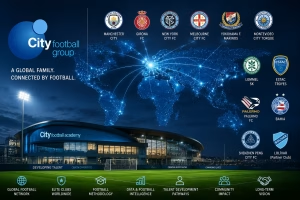
Match Tour 11 supports several stages of the pathway. Players and teams may begin with training camps, including independent camps at European club facilities or official City Football Group training camps across Canada under the Manchester City Football School brand. Teams may also travel through international football tours or compete in international tournaments.
For individual players who are ready for formal assessment, Match Tour 11 provides player trials and evaluations. These structured opportunities can place players inside professional club environments across Europe for honest feedback. For players ready to compete professionally, Match Tour 11 also offers player management and professional signings.
The key is timing. Not every player needs a trial. Not every international experience should be treated as a scouting event. Some players need more training. Some need better competition at home. Some need a stronger player profile or full-match footage before pursuing evaluations.
A credible pathway is staged. International football can help identify the correct next step rather than forcing every player into the same route.
How Coaches Can Maximize Development Before, During, and After a Tour
Coaches play a major role in turning international football into real development. The tour itself is only part of the process. The preparation and follow-up are just as important.
Before the tour
- Define the main development objectives for the team.
- Identify tactical themes to test abroad.
- Prepare players for different match styles and training demands.
- Set expectations around behaviour, recovery, punctuality, and communication.
- Explain that the experience is about learning, not only results.
During the tour
- Observe how players adapt to new opponents and environments.
- Use short meetings to connect match experiences to development themes.
- Protect recovery time so players can perform and learn properly.
- Track leadership, communication, and professionalism.
- Keep feedback clear, practical, and connected to the player’s role.
After the tour
- Review what the team learned technically and tactically.
- Hold individual player conversations where appropriate.
- Update development plans based on what the tour revealed.
- Use video, notes, and coach observations to guide future training.
- Connect the experience to the next stage of the player pathway.
This structure helps prevent the trip from becoming a one-off memory. It turns the experience into a development reference point.
What Should Parents Understand About Competing Abroad?
Parents should understand that international football is valuable when expectations are realistic. The goal is not for every player to be discovered, signed, or selected. The goal is for players to grow through challenge, exposure, feedback, and adaptation.
Parents should look for signs of learning. Did the player become more aware of the game? Did they understand what they need to improve? Did they respond well to unfamiliar coaching? Did they handle travel responsibly? Did they compete with maturity?
These outcomes matter. A player who returns with better habits, clearer motivation, and stronger self-awareness has gained something important. Development is not always dramatic. Often it happens through small but meaningful changes in how the player trains, prepares, and thinks.
Parents should also be cautious with unrealistic promises. International football experiences should not guarantee professional contracts, trials, scouting outcomes, or club selection. Serious providers should communicate clearly about what the experience can and cannot provide.
How Match Tour 11 Supports Player Development Abroad
Match Tour 11 is an international football agency and sports tourism brand founded in 2018 and based in North Vancouver, British Columbia. The company operates across North America and Europe, connecting players, teams, clubs, academies, and school football programs with professional football environments.
The company has supported over 500 players, delivered over 50 international trips, and worked with professional clubs across Spain, Italy, Austria, and England. Match Tour 11 is also a FIFA-recognized international football agency and the exclusive City Football Group partner for Canada.
That combination matters for player development through international football because the company understands both the travel demands and the football purpose. A strong experience requires more than hotels and transportation. It requires appropriate training, suitable competition, reliable coordination, clear communication, and honest pathway context.
For teams, Match Tour 11 can organize football tours built around training, matches, stadium experiences, cultural learning, accommodation, meals, transportation, and full logistics. For players, the company can support camps, trials, evaluations, and professional pathway conversations where appropriate.
The result is a more complete development model: players can experience international football, understand the standard, and receive guidance on what should come next.
Useful Football Development Resources
Players, parents, and coaches can also use credible development resources to better understand football standards. The FIFA Training Centre provides player and coach development content. UEFA offers information on coach development, coaching courses, and grassroots football programmes. Canadian players and families can also review the Canada Soccer ecosystem to understand the domestic development structure.
These resources do not replace training or competition, but they help families and coaches frame international football as part of a broader development process.
Common Questions About International Football Development
Does competing abroad make players better?
Competing abroad can help players improve when the experience is connected to training, reflection, feedback, and continued development after returning home. The trip itself is not enough; the learning process matters.
Is international football only for elite players?
No. International football can benefit committed players at different stages, but the itinerary and level of competition must match the group. High-performance players may need stronger opponents, while younger teams may need a balanced development and education experience.
Can an international tour lead to a trial?
Sometimes, but it should not be assumed. A tour can help players understand the standard. Formal trials depend on player level, readiness, profile, timing, club fit, and availability.
What age is best for international football experiences?
The right age depends on maturity, team goals, travel readiness, and development purpose. Younger players may benefit from cultural and technical exposure, while older players may use international football as a more serious benchmark.
What should players focus on during international matches?
Players should focus on decision-making, communication, tactical discipline, technical execution, adaptation, and response to feedback. The objective is to learn from the environment, not only chase individual highlights.
Final Thoughts on Player Growth Through International Football
Player development through international football works best when the experience is planned with purpose. Competing abroad can challenge players technically, tactically, physically, mentally, and socially. It can expose habits that need improvement and reinforce standards that players may not fully understand at home.
For teams, international football can strengthen culture, create shared learning, and give coaches clearer information about player maturity. For individual players, it can provide a benchmark that supports future decisions about camps, trials, training, or pathway planning.
The most important factor is realism. International football is not a shortcut to professional success. It is a development environment. Players who approach it with humility, focus, and discipline can gain valuable lessons that influence how they train and compete long after the trip ends.
To discuss international football experiences for your player, team, academy, school program, or club, contact Match Tour 11 with your age group, level, preferred destination, travel window, and development objectives.